MacOS kernel panic announcement asking if you want to forward the kernel panic dump to Apple.
Image is a screen capture of a screen capture from a blog article linked as Reference 2. Jim thought to catch this standard Apple alert box.
As Apple updates MacOS Catalina, stability appears to be on the decline. Here at Camp Dismal, we are experiencing a number of issues that the Dismal Wizard believed were related to USB disks. This 27 inch Retina iMac has 2, a USB Blue Ray drive from MacSales and a LaCie external disk that had been used for disk backup on our FreeNAS file server.
I’ve been sending crash reports to Apple. I can visualize some summer intern at home up to his armpits in panic reports and hang reports. What is going on? I have no effing idea. After the break, what I have tinkered with to no avail to remove the issue.
Image taken by the author and manipulated in Apple iOS Clips.app. Photos of the Bovver Boys courtesy of their social media minions.
Rocky has made great strides in his house manners. We continue to work on treat taking, table manors are largely down when I’m at the island counter, and he is getting the hang of moving about the house. He’s caught on that Missy won’t be bullied to change beds.
He’ still a shouty git. He still wants brekkie at 0400 but waits to mug me after a loo visit. He still wants his tea around 1530 but can be distracted into waiting until 1630 or so. He’s still working on meeting trades and has yet to catch on to the notion that trades are not Blighters of Zombies. Maybe Zombie Squad HQ has a training for that.
So why is he Mister Fancy Pants?
Mister Fancy Pants
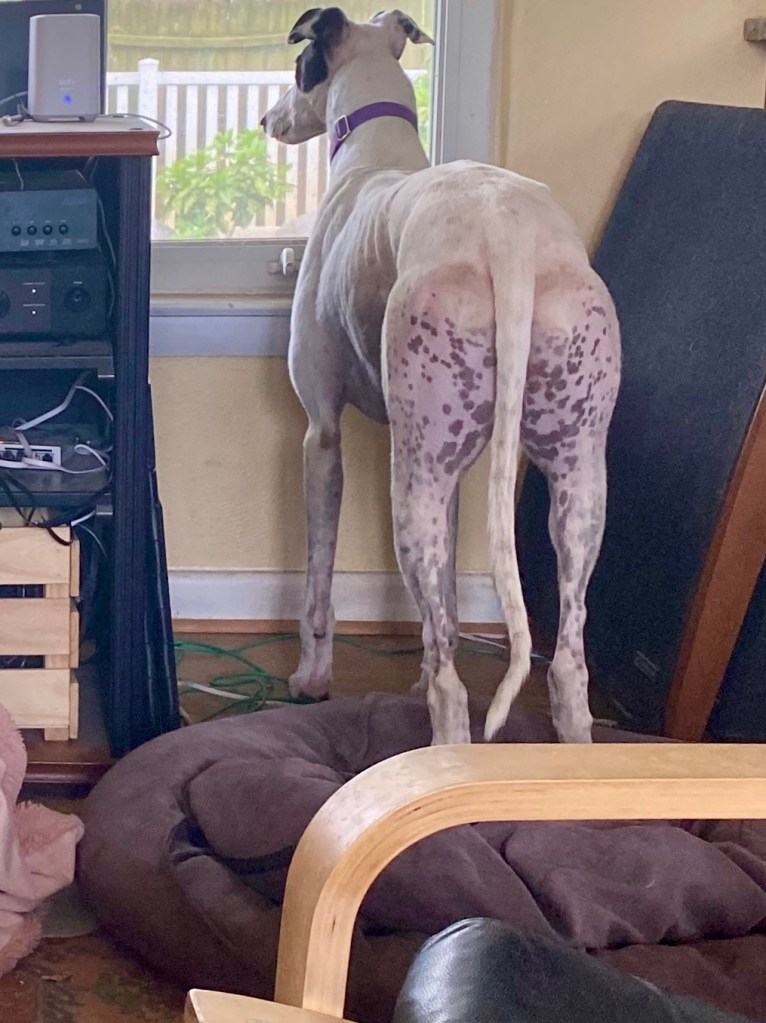
His ticking makes him look like he is wearing yoga pants! This is an iOS 13 Apple Clips manipulated image that exaggerates his markings and coat texture. In boring reality his bum looks like this.
Rocky showing off his yoga pants while watching Squizzer TV
So that it?
No, he did something stupid so Missy give him the nickname for a Twitter post. Her social media assistant has forgotten the specific incident.
Apple iOS Clips App is a lot of fun
Clips App can process new camera images or video clips to apply various transformations to them. I’ve done a couple of things where I’ve grabbed a promising photo off of Twitter, filtered it, and posted it back as a comment on the original post. I modded an image of @NormTheCairn. Later that day both #BovverBoys were posting photos for me to render for them. I like the “Comic” filter.
Before
The Bovver Boys posted this image on the occasion of friends day. I suspect it is a paste up but it is one of their better efforts at getting both of them into the same image. So I saved it to my iPad and had a go at it.
Bovver Boys before Comic Rendering
After
This image is the result of cropping and applying the color version of the Comic transformation. There are monochrome, pen and ink, and various color transformation filters. I keep coming back to the color Comic filter.
Bovver Boys Norm The Cairn and Rupert after comic render and crop
This may be a good technique to try for #ZZST storyboard collages. The ZZST artists make these up using Zombie cartoons as a base layer and clipped images of the brave Zombie Squad war fighters participating in that Saturday’s event.
With the advent of iPadOS and development work at Twitter, Inc. the iPad Twitter app has become unstable. As of iPadOS 13.1, multiple users are seeing the following problems.
Each time the app is updated, view mode switches from the most recent to “Home” view. Most users prefer the timeline view.
In both home and timeline views, the app interrupts what you are doing to refresh the view.
The app segfaults at random
The app hangs in the tweet editor
The app segfaults in the tweet editor
In this article, we’ll look at an alternative Twitter app. There are two well regarded apps, Twitteriffic and Tweetbot having similar user interfaces and none of the rude behaviors mentioned above.
Those of you who saw the John Darko interview of Jason Stoddard and Mike Moffat filmed at the 2018 RMAF know that both have a passion for Schitty puns. During this interview, Mike teased a “Schiit Pi” concept. Mike’s idea was to embed an ARM processor in products to pick up additional digital signal processing tasks beyond the abilities of the Burr-Brown parts he had been using.
Jason is adamant that Schiit will not become a “software company”, that is offer IOS and Android apps or make devices having a significant user interface say like Roon Controller or Volumio remote. The ongoing maintenance of these products is simply too costly for the Schiit minimalist value first design esthetic.
A Minimalist Streaming Player
So can we make a minimalist streamer using a hatless Raspberry Pi? If we did, how would it sound? This product is as basic as a Roon Player can get. It turns out to be a very good one. Will Jason put it in the catalog? Probably not. Volumio got there first with more software integrated.
Those not wanting to tinker with hardware and software will find Volumio Primo a good alternative that provides a SBC and DAC supporting AirPlay, Rune, Roon, Spotify, and others but excludes the headphone amplifier. John Darko’s review is excellent and he likes the sound of Primo and the value offered. Primo is comparable, maybe not quite as sweet as the Allo Digi+ Signature. However, the ALLO devices requires you to bring your own DAC.
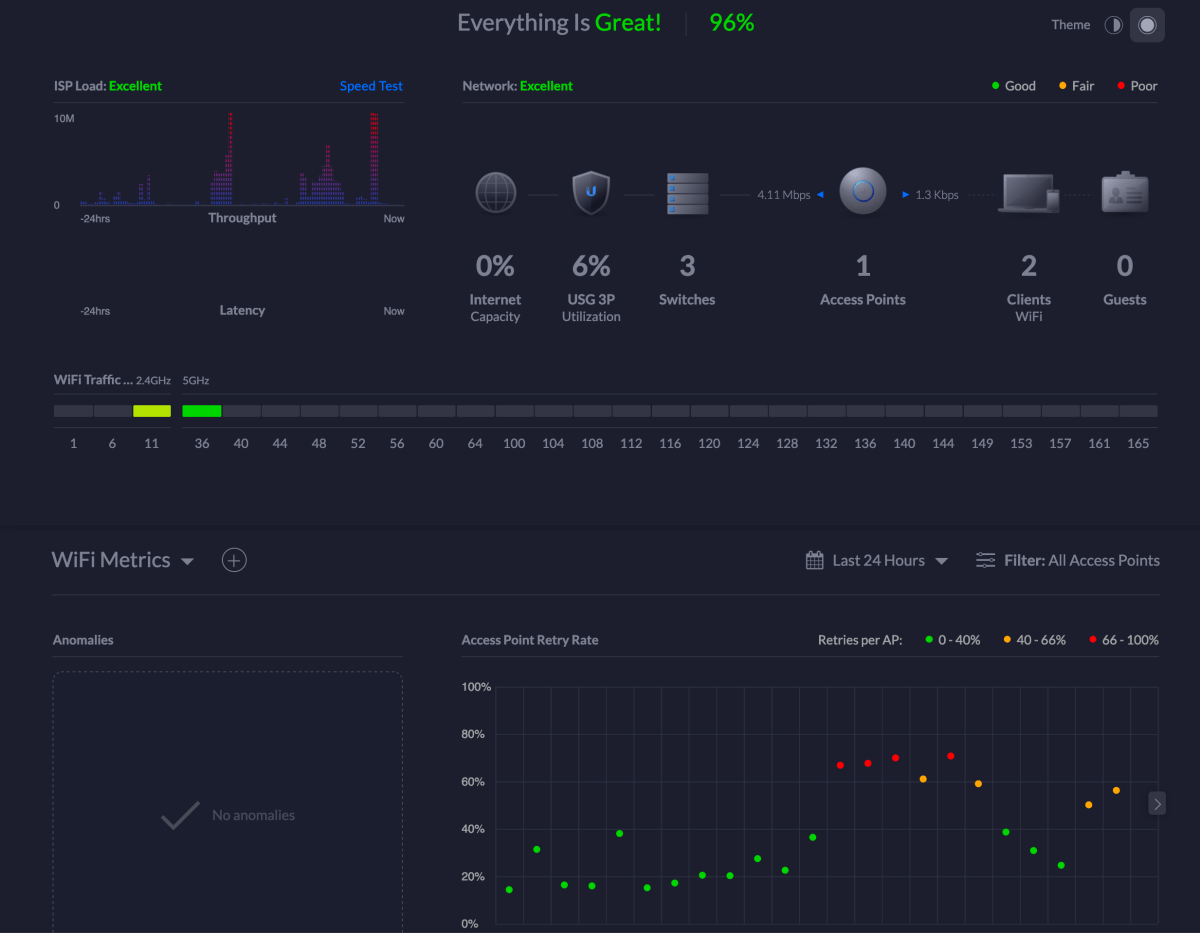
While looking after his church’s Ubiquity UniFi network plant, the Moocher scrapes his knuckles. A simple update and put guest policies on the various guest wireless networks.
A year ago a local managed network services contractor configured our USG, switches, and access points. The church played the role of contractor subbing some of the wiring, doing some ourselves, and hiring a network installer to dress out the rack and install the service outlet plates. A second contractor configured the church purchased network core.
A year later, we discover that one of our contractors had left the guest WiFi networks open to the main LAN from whence the controller could be configured. So change that right? Yes, but not from the WiFi. All hell broke loose. The hot wash is after the break.
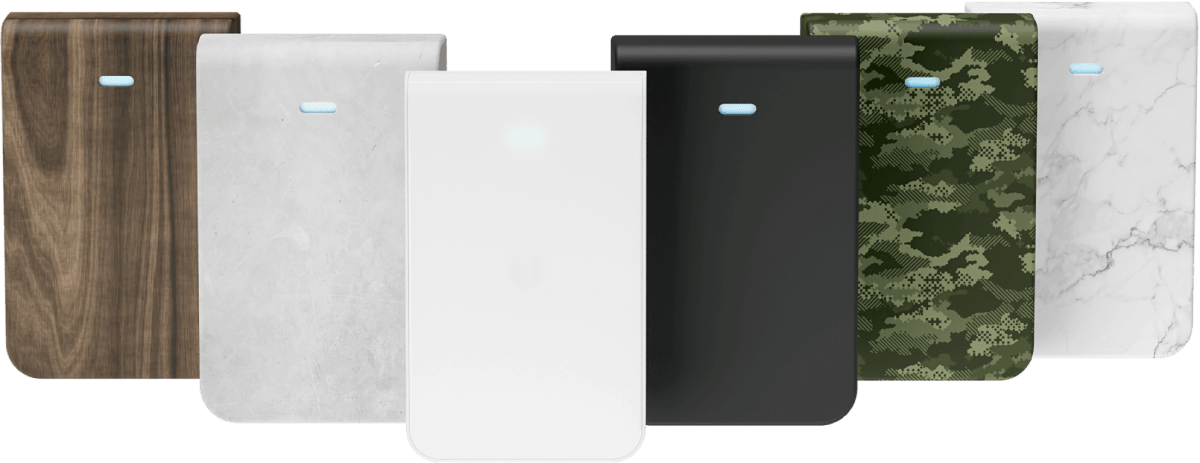
The Retired Moocher decided to make the move to all Ubiquity UniFi home networking equipment. The moocher’s home network is typical of that found in a residence or small business. We have a wired Ethernet network that serves all of the high bandwidth stuff plus a WiFi network that serves the Moocher’s iThings, guests, and Internet of Things. A Netgear Orbi had been carrying this traffic with the occasional mysterious fade. Desiring more visibility into the network’s behavior, the Moocher decided to retire the Orbis and install UniFi In-Wall HD and AC access points. The Moocher describes his deployment.
For the longest time, Apple Airport Extreme secured the Dismal Manor networks. This began back in 2002 when, out of curiosity, the Head Moocher bought an Air Port Express to add WiFi in the early days. The Moocher had noticed that firmware updates kept showing up for the Airport products so concluded, rightly, that Apple was making an effort to keep these products up to date and secure. When Apple discontinued the Airport product line, it was time to move on. But to what?
John Darko of Darko.Audio fame asked what you hide your Raspberry Pi based audio player behind. That got me thinking. Give it a face like a Bryston Audio BDP-Pi player. Could that be done?
John was a fan of the RoPieee Linux plus Roon Bridge distribution so I gave RoPieee a try. In reading the RoPieee installation notes, I noticed that it supported the Raspberry Pi 7 inch touchscreen display. Having one lying around, I decided to add it to the basic Signature One player.
As always with DIY, some assembly is required and it is not all in the fine manual. I was using my display with an Allo DigiOne Signature HAT assembly. This HAT blocks access to the GPIO power pins. Oops — what’s the work around. Keep reading after the break.
Radio, like most else, has gone digital. In the early days of digital signal processing, pioneers realized that many modulation and demodulation techniques could be performed by digital computation.
As computers became cheaper and faster and integrated circuits became cheaper and faster, it was inevitable that the guts of radio receivers and transmitters would be mostly digital and that computers would do much of what went on inside new radios.
This post will describe the initial exploration of GQRX and RTL-SDR here at Dismal Manor. Most of what is already written on the Internet neglects to mention a couple of details the Moocher learned the hard way. Find out what these are after the break.
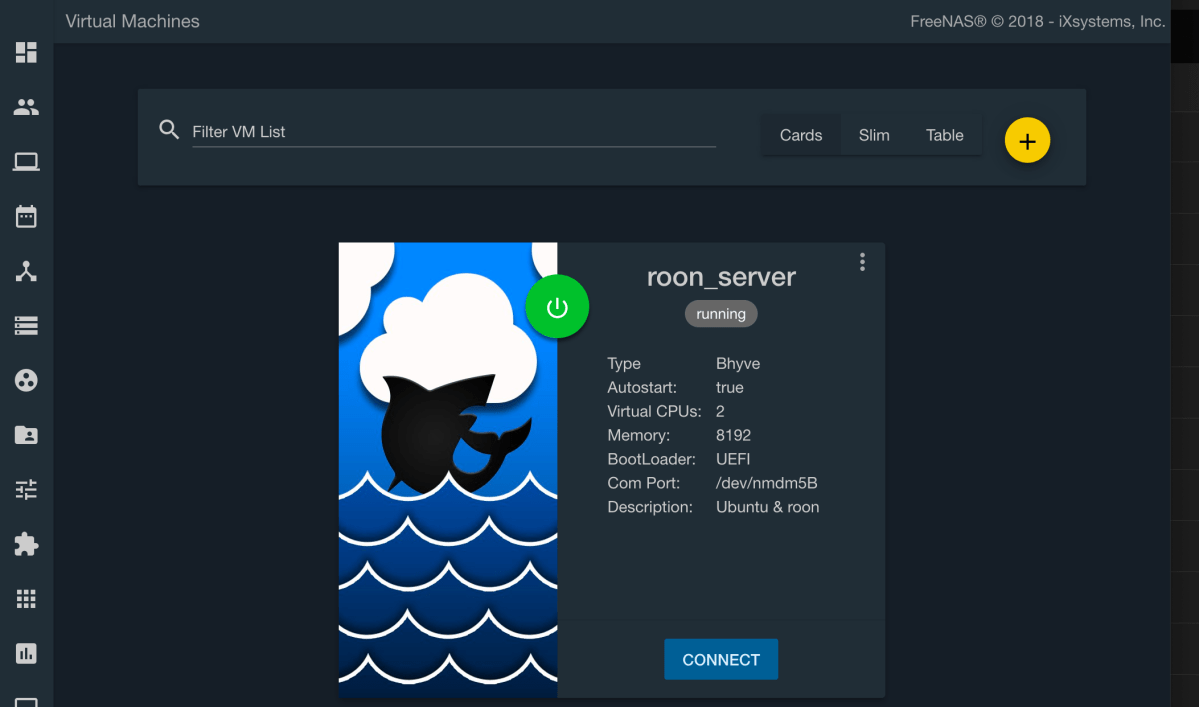
FreeNAS 11.2 has been out for a few weeks. After some time running Roon on a Ubuntu equipped 2009 Mac Mini, I decided I’d give Roon a try in a BHYVE VM on the new FreeNAS build. This note recounts the experience so far. As usual, both FreeNAS and Roon have their secrets and they interact.







You must be logged in to post a comment.