I’ve been seeing a lot of whines posted to TrackR Bravo adverts on Facebook. These seem to be from people who bought one or more TrackR Bravo devices expecting magic. Their things would just appear on the app map.
TrackR Whines on Facebook
I’ve been seeing a lot of whines posted to TrackR Bravo adverts on Facebook. These seem to be from people who bought one or more TrackR Bravo devices expecting magic. Their things would just appear on the app map.
The Apple application architecture that seamlessly integrates your Mac with your iPhone and iPad is a strength of the Apple product line largely unknown to folks who have not bought into iThings. In the past, Apple offered Aperture to serious amateur and professional photographers and iPhoto for recreational photographers. With Mavericks, Apple replaced the earlier products with Photos, more capable than iPhoto but not as capable as Aperture. To close the gap, I subscribed to Adobe Creative Cloud for Photographers. Can Lightroom and Photos coexist? How?
Bluetooth item trackers are all the rage if the Interwebs are to be believed. These gadgets are dog tag sized devices designed to be tucked into a wallet, stuck to mobile items, or added to a key ring. They are basically Bluetooth 4 beacon devices that advertise their presence. To be an item tracker, they need to do little more. Just play Marco Polo with a mobile or other compatible Bluetooth device. About 5 or 6 companies make these things with another entering the market every few months. Most fundraiser on Indigogo so that is a good place to keep an eye peeled for new developments in this space.
The first is a link to a TrackR Bravo referral code. The second is a link to the Indigogo campaign of the European upstart mentioned below. One of the perpetrators designed Steve Jobs yacht. The third is a link to the TrackR Atlas Indigogo campaign. The fourth is Wikipedia on Bluetooth 4.0 protocol.
Things are highly fluid in this space, especially with the application. Most brands get the hardware right and the app usable then go to market. Once launched, they continually improve the app to fix problems and refine the user interface. Last season’s review on Engadget or Gizmodo will not reflect the current product experience.
My personal opinion is that the advertising copy writers are overselling these devices but that they can be useful if you understand their capabilities and limitations and use them within those capabilities and limitations. I’m writing this article to offer you my understanding of these devices and their application in hopes that this will spare you some disappointment and help the product category find its niche.
Apps and beacons don’t currently interoperate. It would be nice if a single app would support multiple beacon families because manufacturers are tailoring the devices for different applications using different packaging. For example, one is credit card sized for use in wallets. Another is packaged for pet tagging. Some are thicker to have longer battery life.
The Bluetooth beacons don’t work well enough to serve as a wander alert for people or pets. The desire to keep them low power and small prohibits putting a GPS receiver and cellular radio in the device which means that location must be indirect. When a receiver hears a beacon, it reports its position and the beacon ID to HQ and HQ notifies you if it is one of yours. This is what TrackR calls “crowd GPS”. It is not a substitute for the real thing when it comes to life safety.
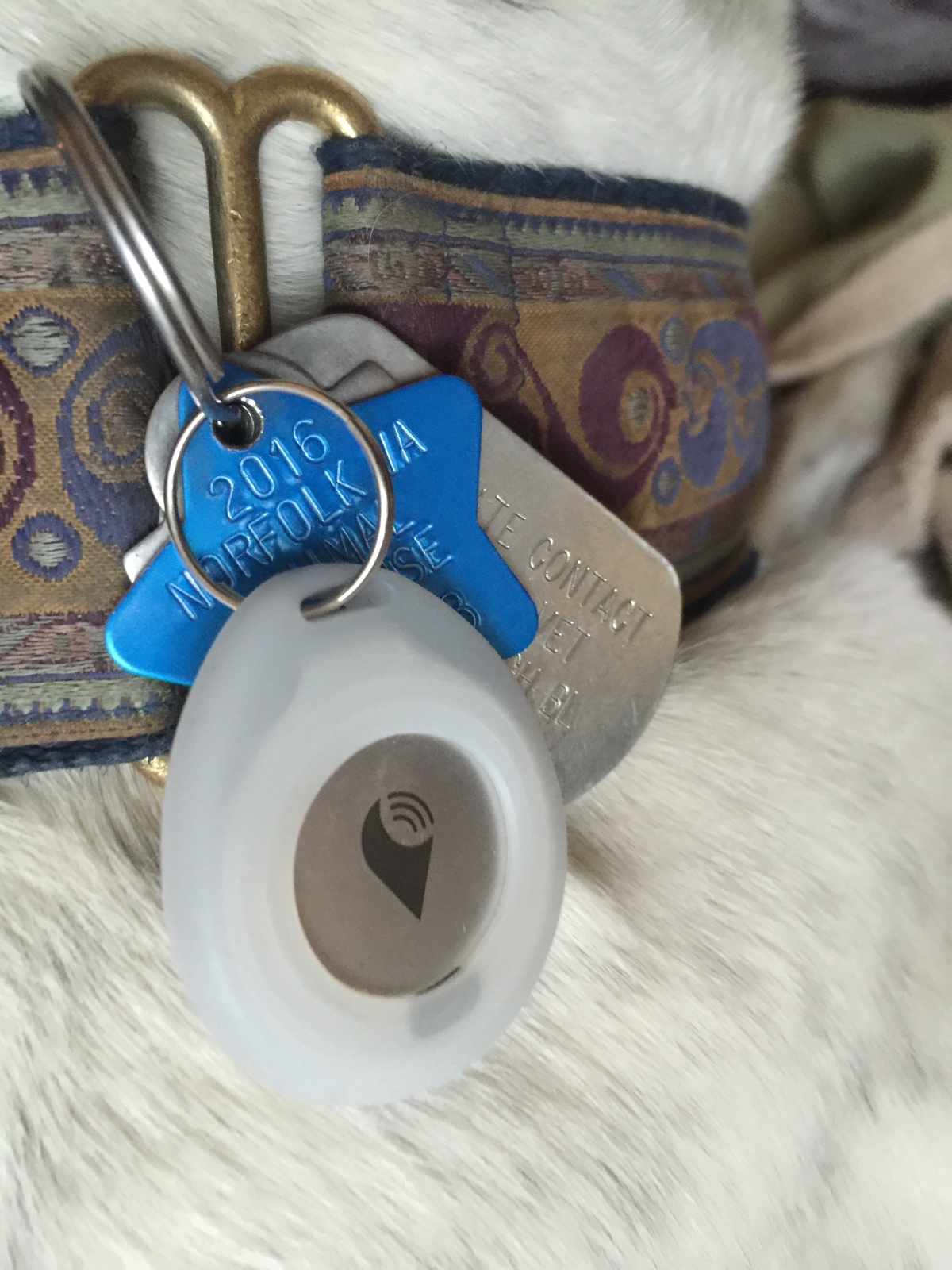
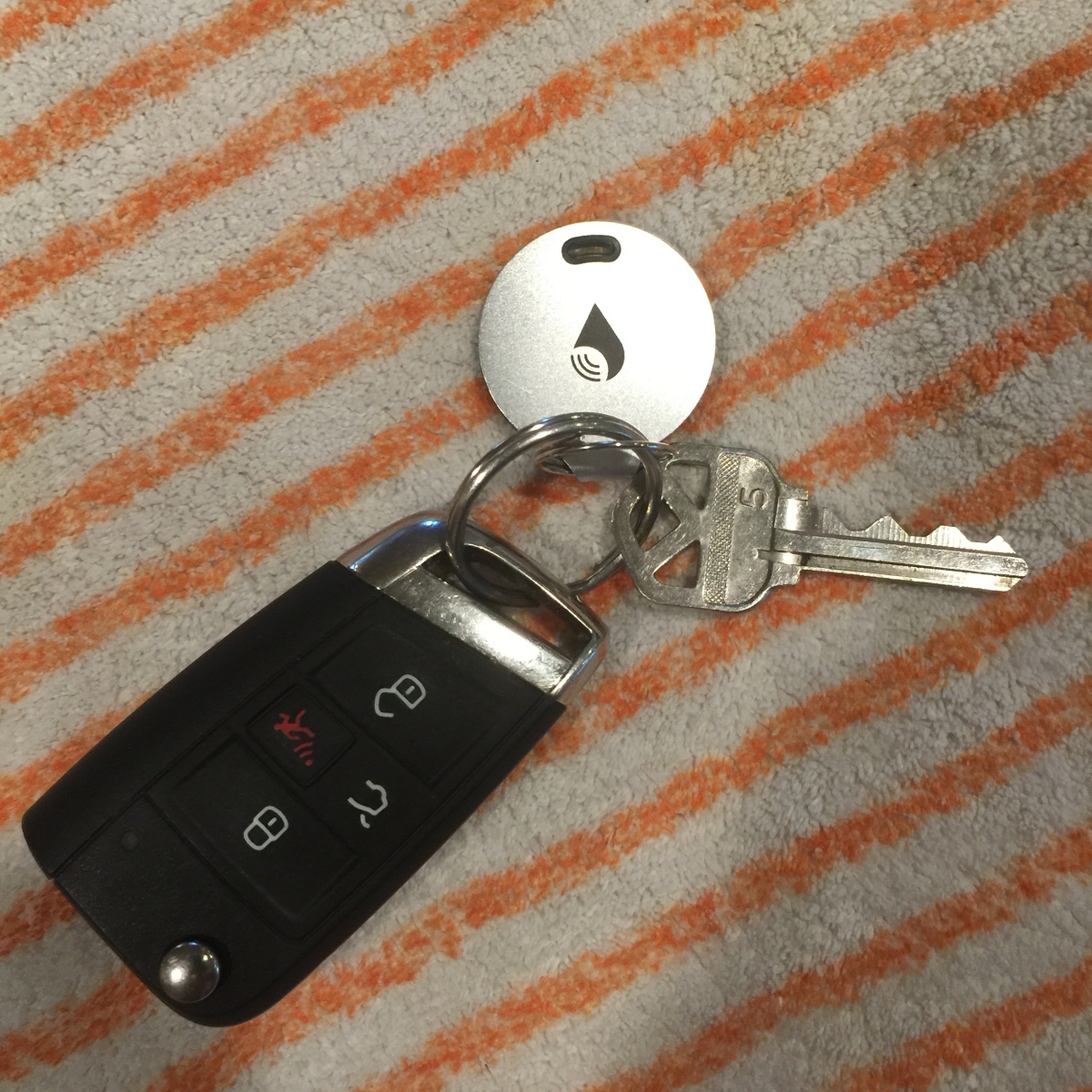
TrackR, one of the better known brands in the US, held a buy one get one sale between Thanksgiving and Christmas. Having purchased a new car that has high tech keys, and having successfully laundered one of my two keys (it lived, this time), I decided some precautions are in order. Can a Bluetooth tracker be helpful? So I bought 2 pair, one to go on the keys and one to go on the houndies.
My trackers arrived shortly before Christmas so I downloaded the app, set up the trackers one at a time so that they would actually be attached to the things they were named for, and gave them a try.
The pairing process is simple. You download the App, get an account from the manufacturer, and pair each critter. The pairing starts with the app and the mechanics are app specific. Basically, you tell the app to listen for a tracker, you press a button on the tracker to start it advertising, and the app finds and logs the device. The app will ask you to name the device. Once the device is named, setup is complete and you can move on to the next.
The beacons announce themselves and listen for the controlling terminal. On command from the controlling terminal, they begin chirping. On a second command, they stop chirping. The beacons are always announcing at a low rate to save battery while allowing themselves to be detected
The controlling terminal listens for the beacons. The Bluetooth 4 protocol lets the beacon report the transmitted power. The receiver includes the received signal strength along with the packet. This lets the terminal indicate if the beacons is near (within a meter or so), close by (within 5 meters), or distant (can be heard but faintly). The protocol does not allow the terminal to determine a bearing or a range.
I bought my TrackR Bravos with the intent of finding the car keys when they went missing and with the hopes that they would prove useful with my hounds.
The Marco Polo process is slow and the radio is weak so it is unlikely that a Bluetooth tracker will prove useful in locating a walkabout houndy, I was hoping that I could tell if Nick was exploring a neighbor’s back garden from the street but the radio strength and dynamics just don’t permit it to see a moving greyhound. So dog recovery the old fashioned way, check each back garden.
Trackers do work well for the missing key problem however. Tell missing keys to sound off. If the sound comes from the washer drum, you’ve just averted trouble. The TrackR Bravo makes a distinctive chirp using an FM modulated pulse that rises in volume and frequency. You won’t mistake it for the fridge door ajar alarm, the oven timer, or incoming SMS alert. It is distinctive but not very loud. It might be hard to hear in a noisy environment or across a large room. And not from the neighbor’s back garden. But it can be heard from a pocket, a laundry bin, or washer drum with the door open.
Location works both ways. Pushing a button on the TrackR fob will cause your mobile to sound off. Much more convenient that firing up Find My iPhone if you know the phone is in the house. You may have to send the wake-up in multiple rooms but it does work. The ping is different than the one Apple uses but it can be differentiated from most normal phone noises.
My VW keys have survived a run through the wash but the dryer will probably fry their brains. Modern keys have RFID transponders and near field transponders that open car doors and allow you to start the car. The transponder ID is matched to the vehicle and the vehicle responds only to the registered transponders. That means you can’t go to Home Depot to have a key cut for a few dollars. It is back to the dealer for expensive parts and a hour of tech time to pair the new key to the vehicle. And if your vehicle is old, you may have to wait for Black Forest elves to make a replacement. So caution is good.
TrackR has an Indigogo project to raise funds for a device they call TrackR Atlas. Atlas is a night light sized plugin terminal that listens for beacons from all manufacturers. Put one Atlas device in each room to be covered and it will tell you by WiFi what can be heard in that room. The app can be configured to give an alert when a devices enters and leaves Atlas’s earshot.
So, what might this be good for? A greyhound door bell? They never remember to ring the bell. And they may bark once to call you to the door. The bark is optional. So, what happens if I plug in a TrackR Atlas on the back stoop? Will it tell me when a houndy comes up on the stoop? Probably. Most of the time. I can come to the door and let them in.
TrackR Atlas is the first product brought to my attention that will report other maker’s beacons. If you have a Tile or one of the European brands, you can use them with TrackR Atlas. One French brand has an Indigogo to launch their products in the US. To differentiate themseves, they chose to use a bigger battery and go for 100 meters range vs the 10 meters or so that a TrackR Bravo can manage.
I had considered using a Ring doorbell for this task but the motion sensor gives a fair number of cry wolfs from passing traffic. Having an emitter on the hound solves the motion detector cry wolf problem. If only Tracker would make the TrackR Atlas device outdoor temperature rated. Basically, it needs to work from -40F to 120F or so, operating temperature, not storage. Mine is under canopy sparing it the summer sun. It does not need to be drip proof as electrical code outdoor outlet assemblies are required to be drip proof in the US.
So, what happens if your dog goes walkabout at the park? That’s where “crowd GPS” comes in. Each TrackR app listens for all TrackR beacons, not just the ones paired to it. When a mobile hears a TrackR, it reports the TrackR UUID and the phone’s location to TrackR world headquarters. World HQ tells your phone where your beacon was heard. This mechanism has successfully recovered walkabout dogs in an urban environment.
One of the TrackR sales pages shows where TrackR apps are active. Just where they are, no identifying information. This gives you a feel for coverage in your city and neighborhood. There are several instances of the App active in within a few miles of home. Not enough to find a walkabout dog.
A couple of years ago, I wrote a guide to web hosting for small non-profits having relatively simple content management system based sites. Since then several acquaintances have asked about personal web hosting for DIY efforts by folks who are not software engineers. This article explains the planning you need to do in the beginning and why I use WordPress for this DIY site.
This guide is intended to be of some service to my artist, dog breeder, and hobbyist friends making promotional sites or personal communications sites like this one. There are many hosts out there but most of what is written evaluates hosts for use by small agencies and solo web services consultancies. There is little for the DIY community.
That Was the Week that Was is an old ’60s TV show of news satire. Robert Frost, BBC refugee, hosted with his British accent, prescient interviewing skills, and imperial irony. The show suggested the title for the 2015 year end post.
I’m late. I meant to write this in October but got distracted by contractors.
Missy, Nick and I have been together for 13 months and she’s been an absolute joy. She’s finally felling pretty settled in as indicated by a drop in nervous play, chewing, and funky emissions. She’s still an active goofball but she’s happy to have a yard in which to romp, loves to hang out on warm evenings, and takes great joy in trolling school kids, bicyclists, and motorcyclists.
At sunset a neighbor would walk her terrier mixed breed. This stumpy little guy was white with black spots and walked the street head out and determined. Because he showed up every evening just past sunset, we took to calling him bedtime dog. Missy would stay in the yard until she’d chased bedtime dog at the fence. Take her in before bedtime dog was chased and she’d pester you to go back out. I think they had a thing going.
After a summer of contractors, day care at Judy’s, and random trips, Missy is much more confident with strangers and has taken the lead on our walks. Missy is still reserved with visitors but she’ll usually stand with me while visiting rather than hiding behind. She’s doing much better when out shopping but a trip to Home Depot is still a bit much stimulation for her.
Don’t even think of giving preferential treatment. She figured out that Nick was getting fish oil on his ration and she wasn’t. They both became fussy eaters because Missy wanted fish oil and Nick had to check both dishes to find the one with fish oil. This fall, I found both standing at Nick’s ration grumbling. So now they both get oil. Other than that, they get on pretty well. Occasionally, Nick tries to pull rank for preferred seating but she’s not buying it. Rhea would let him have where ever. Missy tells him off. And when Missy calls out in the garden, Nick comes running to join the chase. He definitely looks after her.
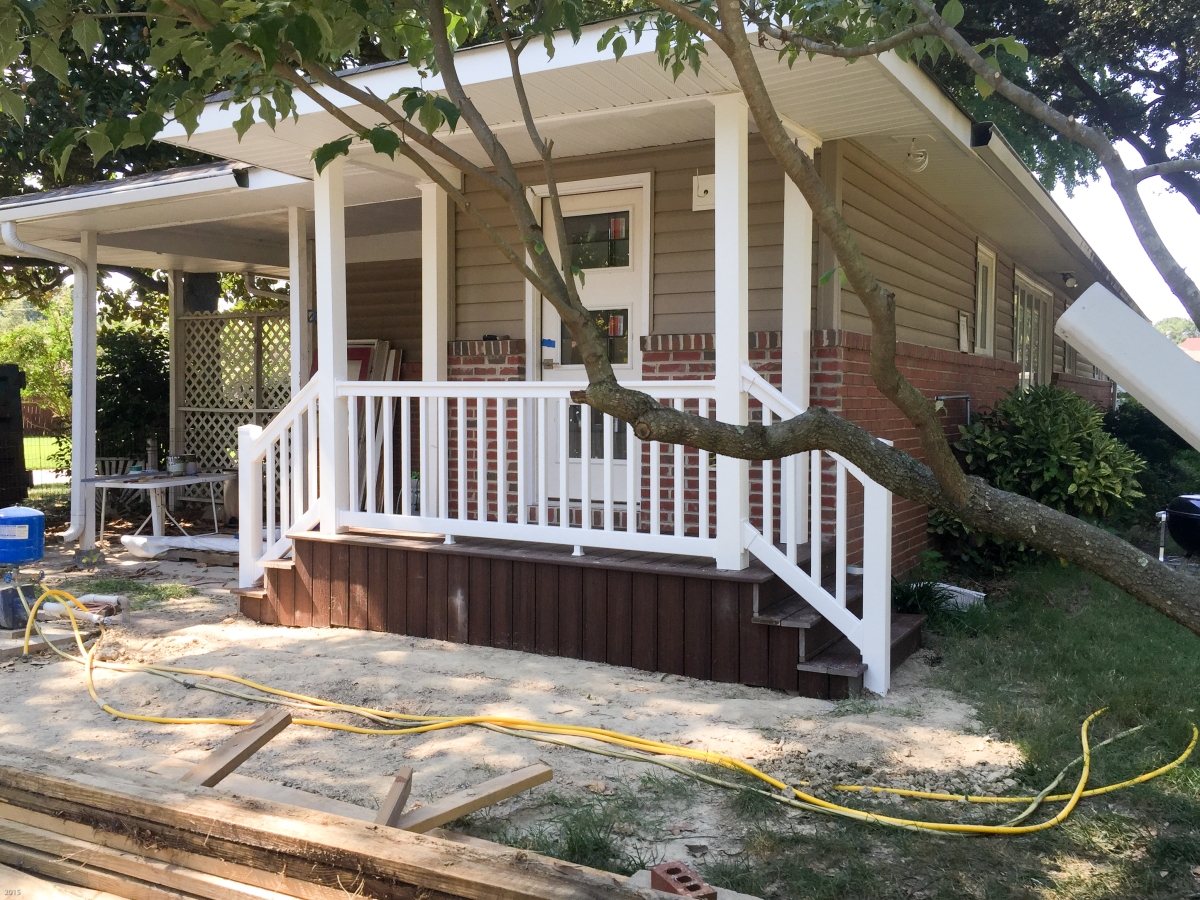
Now that the addition and kitchen are finished, it was time to tackle the side yard. Construction left the grade a mess, clay subsoil to deal with, and a general muddy mess. Local landscaping company Gardens by Oz built a paver walk under the carport canopy, added a paver pad for the wheelie bins, a small raised bed, and fixed the grade and sodded the area chewed up by the construction.
A three man crew did the predatory work, laid the new hardscape, and mulched the back bed in about 4 hours. The first thing they did was to break up the clay by roto-tilling. They raked out the clay using the excess to fill some low spots. Next they tilled in top soil and composted cow manure.
They dug out footprints for the hardscape and edged bed, laid pavers and reused some legacy pavers scattered randomly about the place by the beloved former owner. They planted dwarf gardenia, rosemary, and variegated liriope in the bed.
After 2 days of rain, a crew of four returned to lay the sod. This took about an hour. I have to water every other day or so. The sod is a mix of fescues that grows well in the North Carolina low country. It was important to sod the area because the greyhound traffic is high here and Missy is fond of digging nests. She doesn’t dig turf. The sod has been down for a week. It should be well established by Thanksgiving.
My landscaper suggested a good way to put down the proper amount of water. Set out a pie tin in the sprinkler pattern. Water until the pie tin is full. That’s about an inch. Once the sod is established, a 1 inch watering each week is good. While the sod is taking, an inch every other day is good. The idea is to promote sod root growth into the topsoil below. Once that is achieved (about 2-3 weeks), the sod needs its weekly inch.
Are we there yet?
Are we there yet?
Yes, at last. It was an 8 week project, just like my contractor promised. What he didn’t tell me was that it would be 8 weeks every other week. As usual, weather, other projects, and waits for the cabinet shop to fabricate the cabinets got in the way. One thing neither of us expected was the up turn in the Norfolk Building Department’s permits business. The review we expected to take a week took three and they wanted some changes requiring another trip through the review process.
The project intent was to make a laundry and utility space in conditioned space, a new family entry that served both the carport and the back garden, and a modern kitchen that was easy to work in and allowed the cook to interact with the rest of a family while cooking and cleaning up.
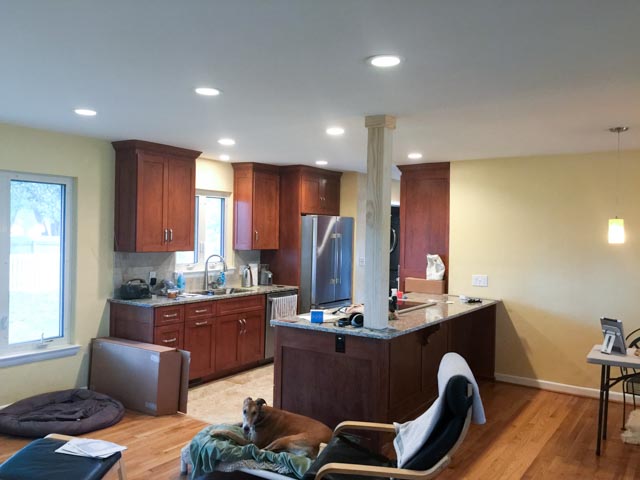
The project borrowed 4 feet of carport and the existing utility closet at the back of the carport to make a new utility alcove, new family entry, and pantry storage. This space also housed the refrigerator and oven opposite each other. A new peninsula housed the cooktop and provided proper workspace for cooking and cleanup. Prep can be divided between the sink countertops and the peninsula. The skink and cooking areas are arranged galley style with a good 5 feet of space between the two counters. It is possible to work at both counters without blocking access to the pantry and garden. And the hounds can move around without being under foot.
My contractor R. L. Blount Custom Homes did a first rate job . The things that stand out are the design. I had a small potatoes architect do the initial conceptual design. I played with that some on tracing paper and concluded that I wanted to move the door and change the porch design to a Charleston style porch with steps parallel to the wall.
The project was design-build. Given a statement of my goals and sketches, my contractor’s designer did a detailed design and prepared permitting and construction drawings. During this phase, my contractor did the structural design required to remove bearing walls, the structural design for two new walls, and the calculations for a beam that would carry the structure formerly resting on the 1955 kitchen’s interior partitions.
I did two things to help this phase of the project. First, I engaged a local architect to develop a conceptual design and some plan views that could be used as a starting point for proposals. The second thing I did was to write up a list of goals and preferences that each bidder could use during the proposal and estimating process.
Estimating is a bit tricky as the job must be estimated from scope of work sketches and task lists developed during the proposal phase. A detailed design comes after award but flat rate estimating guides are well refined and it is pretty easy to work up costs from the rough materials and task lists and to make an allowance for uncertainty in market conditions and approximate amounts of materials and trade time. And key suppliers like ProBuild assist with the estimates as part of their builder services.
My contractor’s designer Matt did the detailed design and construction drawings we needed for permitting starting with my sketches. Evan, my project manager, did the kitchen conceptual design that Matt started from, and tweaked the laundry closet and cabinet layouts a little bit to give us more room for the fridge.
Matt deserves a shout out for getting the new hip roof and nice porch design right. I was biting my nails as it was all going up but it has worked out brilliantly.
Matt did forget to remove some new construction boiler plate from his drawings such as floor insulation instructions. In a small addition like my 9×9 utility space and the renovated kitchen, it is accepted practice to follow the existing crawl space insulating and venting practices. Fortunately, the building department did not insist on compliance with the drawings here. We did insulate all of the new side walls and seal all plate and subfloor penetrations. All the better to keep crawly things out.
My contractor does project management and subs all of the work out: design, demolition, masonry, framing, roofing, siding, exterior finish, electrical, plumbing, drywall and plaster, tile, cabinets, granite, interior finish and painging. Every time we changed trades, there was a wait for interviews, proposals, and start of the next project phase.
Normally, this works quite well. Where it gets complicated is when a small task needs just a bit of work from 2 or 3 trades. Installing the downdraft blower went like that. The HVAC duct technician could cut the cabinet, sub-floor, and foundation and run the duct work but was not an electrician. I ended up wiring the blower because my contractor would have to call back an electrician do make up a cable connector. And Bosch had an error in the wiring instructions. More about this below.
Ferguson Inc supplied appliances and was first rate. Bosch forgot to pack fasteners, etc in the microwave oven trim kit shown in the featured image. Ferguson came through with a parts diagram having part numbers and found everything that should have been in the box that wasn’t. And they expressed it to me over night! Great service. They also restocked an unwise choice of light fixture (looked way different than its catalog photo colors). And they swapped downdraft blower units from wall mount to under house mount for a modest restocking fee.
The Mexican masons did the masonry demolition, cut the carport slab to receive the new footings, dug the footings and made forms, poured the footings using site ready-mix, and laid the foundation and brick veneer. All of this is tricky. It has to be right or the rest of the job is off. They did an excellent job with the layout and the finished brick work is plumb and flat. They don’t work retail.
My steampunk plumbers Chris and Jamie managed to run new plumbing for the water heater, laundry, and kitchen without interrupting services for more than an hour or two. They specialize in new construction and renovations and don’t do repairs but they did a great job on both the bath project and the kitchen project.
The plastering crew, also Mexican, did a great job with the drywall and plaster. We ended up doing new skim coat over the existing lounge area ceiling because it would have been difficult to match the 1950’s scratch coat finish. Another trade that doesn’t do much retail work.
Anchor Electrical did a wizard job with the wiring. They had a bit of a surprise when they found ungrounded circuits for the old oven, and dryer. The cooktop circuit was new (2006) and could be extended to its new location. The other 240V circuits, lacking grounds, had to be replaced, something Evan missed when he was pricing the job My contractor picked up the cost of the 240V circuits that had to be replaced.
The thing I really like is that the crew thought about where the recessed lights should go and supplied Lutron dimmers for the recessed lighting. With Cree LED trims, the place is sunglasses bright when the lights are full up. I normally run the lighting half-bright, even for dinner prep and cooking.
Given a description of how I intended to place the dining room table, the lead electrician properly located the fixtures for the pendant lamps. These kept getting in the way during the tail end of the project but once the table was placed, they were exactly where they needed to be and at the proper height.
They also did a nice job with the yard light replacement. They supplied nice flood lamp fixtures that you won’t find on the shelf at Home Depot. These completely shield the lights from water and have a nice finish that will stay bright and looks good against the white trim.
The dryer circuit was repurposed to serve the Rinnai tankless water heater which is on its own circuit. The red (properly marked) became the ground. The lighting circuits in the old house had to be reworked. None were to code. Power went to the fixture with a switch in the return. We don’t do that any more. I ended up picking up those costs as repairs. Similarly, the outdoor lights which had been on the fritz since my return. The switch was in the work area but there were problems in old work outside the work boundary.
These guys are highly recommended for lighting updates and repair work. Good old work skills and diagnostic skills. They also relocated data, RF, and phone circuits that needed to be moved.
Adrian Hardwood Floors and Tile laid the ceramic tile floor and backsplash, the new wood flooring, and refinished the existing floors. The tile flooring took a week: 2 days of layout and cutting, a day to lay, a day to grout, and clean up. The floor refinishing took 2 days with 2 more that I had to be off the floor while it cured. Nick, Missy, and I spent 3 nights in the Norfolk Residence Inn enjoying downtown Norfolk. Adrian receives my recommendations for floor refinishing and floor replacement. The young crew was patient and meticulous in the layout of the floor and backsplash.
Chuck’s Custom Cabinets and Construction deserves a shout out for the design of the cabinets. Evan and Chuck refined the kitchen layout, especially the stepping down of the cabinet depth in the pantry, the drawers in the peninsula, and the overhanging buffet or dining counter area. Chuck designed and built the cabinets working from Matt’s plan view and a walk down of the site to confirm measurements.
Chuck set the job up to use standard cabinet sizes with a bit of cleverness at the refrigerator where he took up the slack in the as-built ground truth. Chuck’s guys also installed the cabinets doing a wonderful job of coping with the departures from true in the old structure.
The galley kitchen design added 3 feet to the dining area depth that were formerly part of the 1955 kitchen allowing me to put the dining table parallel to the end wall where it had been parallel to the front wall while still having room to use the table ends or the counter.
Panda Kitchen fabricated the granite and installed it. Everything fit. They cut the cooktop and downdraft opening in the field and dealt with the departure from square with a combination of planned off-square cuts and field trimming.
The granite finish turned out nicely and they cut the notch for the column in a most clever way. Using a water jet stone saw, they cut the two sides 2 degrees off vertical so that the plate cross section was keystone shaped. This made the piece self-supporting while the epoxy cured. The piece fits so well that you have to look closely to find the filled joint. This was another place I was biting my nails as the stone changes color during final polishing.
For those doing kitchen renovation as opposed to remodeling projects needing architectural and structural work, I’d recommend Panda in a heartbeat. They have built two kitchens for a friend, the first a planned remodel, the second, reconstruction following a fire.
The project delays resulted from the weather delaying start of earlier jobs, a demanding client that caused lots of rework on a large job that was concurrent with mine, and the inevitable friction of as-you-go contracting of trades. We did have to back up and do a bit of rework on the roof to fix a goof that the gutter contractor caught, and several finish items that required multiple trades like the downdraft blower required trades to come back,
Although everyone was careful to keep the jobsite neat, we did lose some of the bits for one of the deadbolts which were in my scope of supply. Kwikset retail packing is impossible to repack so stuff rattled around and eventually the screws went missing.
Kwikset supplied the parts we misplaced on the job at no cost. That delayed us a bit. I ended up finding my chisels and doing the mortise changes needed for the door plate and strike plate. We found that the parts had gone missing when the interior finish folks were doing their bit of the job. I had supplied the lock sets so the parts were my problem. They’re probably with the eyeglasses that went missing this summer. I suspect the red chaos unit named Missy.
There were two. The downdraft installation instructions for the in-line blower managed to have you wire the cable from the cabinet mounted snorkel assembly to the crawl space mounted blower incorrectly. The contract tech writer who did the manuals looked at the instructions for wiring the blower end connector and had you do the same for the plug from the snorkel that was to mate with it. The end result was that the field wired connector was backward. This connected medium speed to ground popping the breaker.
Fortunately, both cables used the same color code so it was easy to take the hood off the factory wired connector and wire the field wired connector to match.
Bosch also forgot to pack the loose parts for the microwave trim kit. A call to Ferguson had the needed parts ordered and on their way in a day. Everything was stocked in the US so UPS was able to make the missing bits appear the day after they had been identified and itemized.
Bosch designed the trim kit mounting clips for frameless European cabinets. Evan, my project manager, came out and spent an hour fiddling with saws and screws to make temporary blocking only to determine that we could get the cabinet mounted bits mounted directly to the face frame. This is where experience comes in. Evan picked some screws that wouldn’t split the face frame, something I’d get wrong.
Evan bought matching paint to paint the endgrain of the Trex steps. He forgot to turn that task over to the painters. It will take longer to clean the brush than to do the work so I’ve picked up that task. Probably Wednesday once it is warm again.
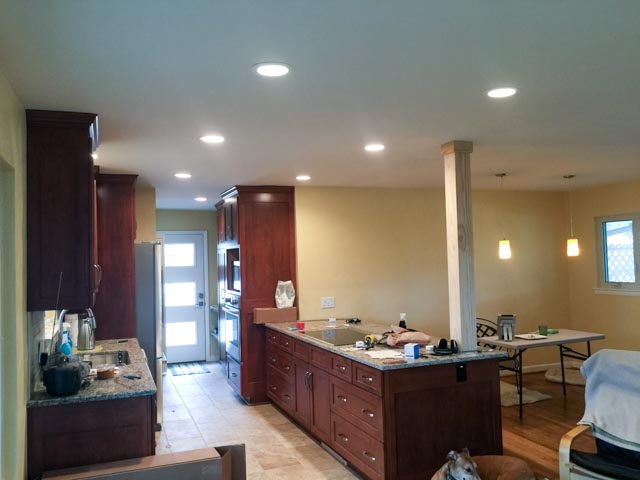
The kitchen project is nearly complete but we are at the 90 percent and stalled point. One big task and several small ones remain.

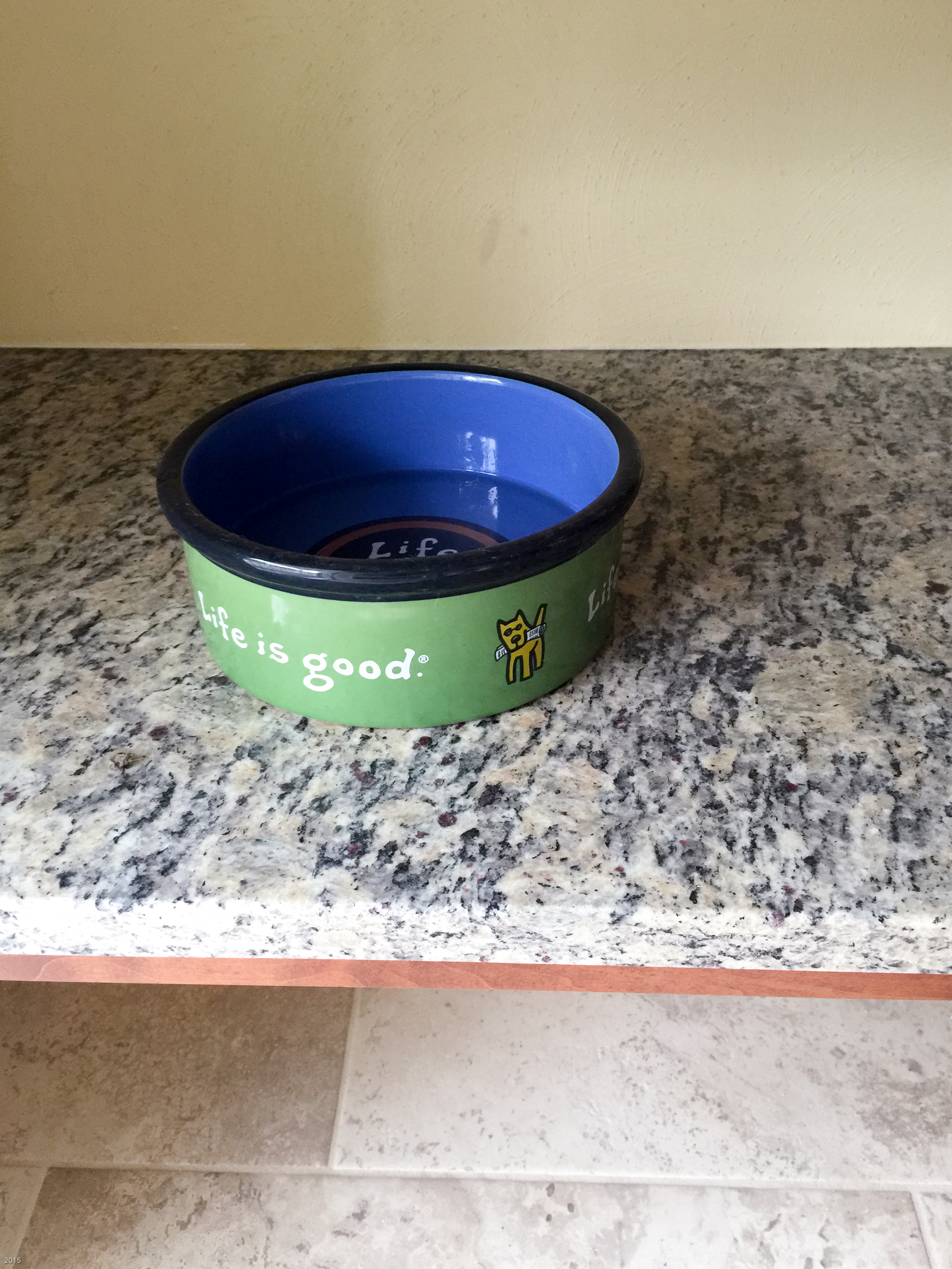
The featured image is a view down the greyhound gallop. The pantry area includes two granite counters cut from the counter top remnant. One (shown at the above) is set at 18 inches and the second at 36 inches. The first is the dogs’ dinner table. The second is for stashing keys, purse, phones, etc needed on the way out the door. The granite is Saint Cecilia Light.
To the left facing the door is a laundry and utility alcove that houses the Rinnai tankless water heater and the laundry. The laundry equipment are Whirlpool high efficiency washer and dryer. The dryer is ventless with a heat pump heat source. Surprisingly, it works quite well in “Eco Mode” in which the heat pump supplies all of the drying heat. The dryer has a resistance heater that can be used to supplement the heat pump or by itself. When using the heat pump source, the drying times are longer but energy usage is 1/4 that when just the resistance heater is used. The heat pump cools the air leaving the drum and preheats the air entering the drum. The water condensed out of the air accumulates in a sump and is pumped down to the drain.
Compared to a conventional dryer, the air temperature rises more slowly so the drying times are longer. Because the cycle is closed, no air is taken from the home or discharged to it. The pump heat drives the cycle and the drying air gets normally toasty by cycle’s end.
I have only two gripes.
This image below shows the new peninsula and the wet wall cabinets that house the sink and dishwasher.

This image shows the new split bowl sink. This design is wizard simple. I’m surprised that it is a recent innovation. Only one manufacturer offers it so it must be under patent. This idea is so obvious, I’m surprised that it is new. One trick I just discovered is that a normal basket strainer allows the sink to drain into the disposer while keeping objects out.

This is the new dining area showing a temporary 4 foot folding table. The new space is about 3 to 4 feet larger than the original allowing a six foot table to be placed parallel to the back wall in the area under the pendant lights. There is still room to use the peninsula as a buffet, snack bar, or kids study area.

I’ve not had a door bell for years. With the old arrangement of entrances, there was only one and folks could knock with the knocker. With the new door, the knocker is gone and there are now two doors, one on the Fletcher side and one on the Townley side with the back garden gate to the right and garden monsters luring in the shadows. So, what to do for a door bell?
An advert for the Ring Door Chime showed up in my Facebook feed. Finally, a useful Facebook advert! The Ring Chime is an inexpensive combination wireless door chime and perimeter camera with off-site recording and it actually works.
http://ring.com — is the new kids in town with a wireless video door bell. This is a two piece or three piece system consisting of the following kit.
The door-side assembly mounts to a mounting plate secured to the siding. Two Torx screws lock the outside kit to the mounting plate. More about mounting in a bit.
When a visitor approaches the door, a motion sensor detects the approach and wakes the unit from standby. The Ring bell reports motion sensed events to the paired IOS/Android device. When the visitor presses the bell button, the Ring bell sends a ring event to the paired devices. The chime and IOS/Android devices will play a chime tone. The camera initiates a video chat session with the app to allow you to see who is at the door and chat with the visitor.
This happens via the local WiFi network but the notification will be routed to the device via the Internet. You can see visitors from anywhere that there is Internet service.
The outside assembly signals all events, both motion and chime presses. The paired application can be configured to announce chime rings and motion events independently. The settings are local to each phone or tablet. Multiple phones and tablets may be paired and each can have its own notification policy.
So, big deal! So far, I’ve described an expensive wireless chime. But the Ring bell does more. It records each encouter to off-site storage. Anybody coming to your door is on candid camera. You have a video record of break-in attempts to show to the police and your insurance carrier. A practiced thief can be in and out before the police respond to a monitored alarm. And without leads, the police can’t pursue a simple smash and grab. We see this repeatedly in the local newspaper. A citizen reports a break-in. The police come and take a report. But there are no leads to follow. If the citizen was home, the description of the perpetrator lacks detail.
The Ring camera is designed for low light and makes passable images. When paired with an inside Nest or Canary camera, you have a video record of the intrusion that the police can act on. Canary has collected several stories of successful apprehensions of burglars when the video captured an intruder known to the police.
Each motion event is saved off-site. It is not necessary to ring the bell to start a recording. The motion detection can be adjusted in azimuth and distance to reduce spurious activations. In reviewing the captured events for this article, I found that it was capturing my returns home from dog walks and from trips. Exiting home does not trigger recording.
I found that passing traffic was triggering recordings several times a day but these are easily identified as nothing is visible in the foreground.
Subscription to off-site recording is optional. Ring charges $3/month for the service or $30 for the year prepaid. The first month is free.
The Ring outside assembly is designed for both wireless and wired applications. When wired, it steals power from the bell circuit and pushing the button completes the circuit to sound your existing chime in addition to playing a chime sound on your mobile or tablet. To use this feature requires connecting the bell circuit to the base plate and adding a diode as shown in the installation instructions. Hopefully, Ring will revise the baseplate to include the diode in the printed circuit. For wireless use, the diode is not required.
Ring includes a level, screws, screw anchors, screw driver, and masonry bit in the kit. The included masonry bit was not robust enough to drill through brick. If mounting to brick, you’ll need to buy a proper 1/4 inch rotary/hammer masonry bit to drill the mounting holes.
Ring’s installation video glibly shows a millennial marking the four mounting holes with a pencil, drilling them, inserting anchors, and mounting the base plate. This procedure may be troublesome on masonry. In my installation I either miss-marked the holes or the drill walked on the brick. I recommend the following procedure. For this procedure you will need a proper masonry center punch and 1/4 inch rotary/hammer masonry bit and a 1/4 or 3/8 inch variable speed drill, preferably corded as drilling each hole takes several minutes.
You must be logged in to post a comment.