Digital audio systems since the beginning have used elevated sampling rates for processing while down-sampling the product to 44.1 or 48 KHz sampling rates for storage and transmission. These design decisions are attempts to satisfy the requirements of the sampling theorem using easily implemented anti-aliasing filters and reconstruction filters.
Category: Audio
Roon in a BHYVE
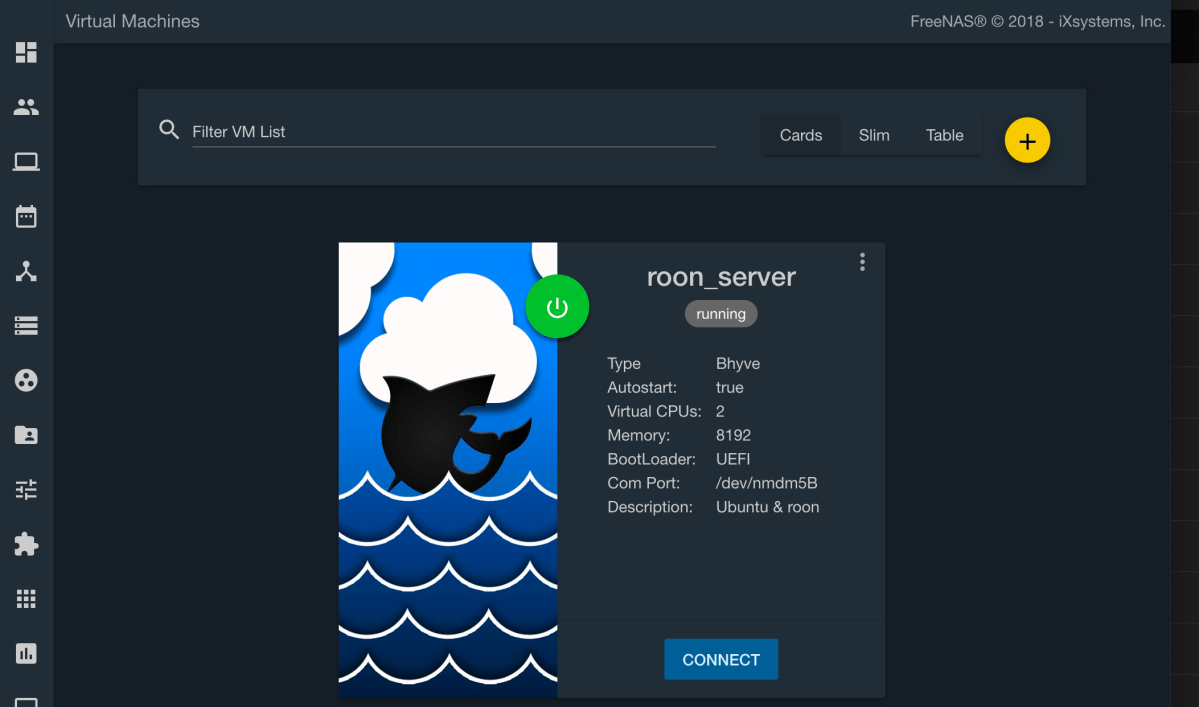
FreeNAS 11.2 has been out for a few weeks. After some time running Roon on a Ubuntu equipped 2009 Mac Mini, I decided I’d give Roon a try in a BHYVE VM on the new FreeNAS build. This note recounts the experience so far. As usual, both FreeNAS and Roon have their secrets and they interact.
Gumby is a good gumby
I’ll try to avoid the schiit puns as Gungnir Multibit (Gumby) arrived and is settled in my audio rack. Gumby is a good Gumby! Jason Stoddard and Mike Moffat founded Schiit about a decade ago to scratch their audio design itch. Schiit has an unusual philosophy and take on high fidelity audio equipment, that it exists to serve the love of music and not to be techno-sculpture in the lounges of the rich. Rather than making a big statement piece for the wealthy, they began by making affordable $100 devices for those wishing for more than headphones plugged into an iBook. And they set out to show that you could build here of mostly US made stuff and be profitable.
I’ve not written on audio and networking in a while but over the holiday I read Jason Stoddard’s Schiit Happens about his return to the high fidelity equipment industry as co-founder of Schiit, a maker of personal audio and value oriented high end audio. I found the book after I had ordered my Schiit Gungnir Multi-bit DAC. Over the break I had also watched a video in which Mike and Jason (the founders) talked about how Schiit came to be and this, that, and the other thing. They are toying with the notion of offering a new product which Mike kept calling Schiit Pi. This got me thinking I should write about my streaming environment again as I had improved it significantly in 2018.
About a year ago I installed Roon Audio and began using it without Tidal. In my original configuration, Roon Audio ran in a VM hosted by my FreeNAS storage server. It delivered audio to either an Apple TV or a Google Chromecast Audio. Both were connected to a Cambridge DACmagic converter by TOSlink. For the first year I passed on the Tidal subscription, assuming that it, like Apple and Amazon streaming, sounded horrid. Then I got curious.
The Moocher is a music collector with a growing CD and record collection. In this article, the moocher describes how he transfers CD to FLAC to play using Roon Labs Roon Player. We’ll look at the motivation behind FLAC, the tools used to turn a CD into FLAC encoded tracks, and how to get the tools.
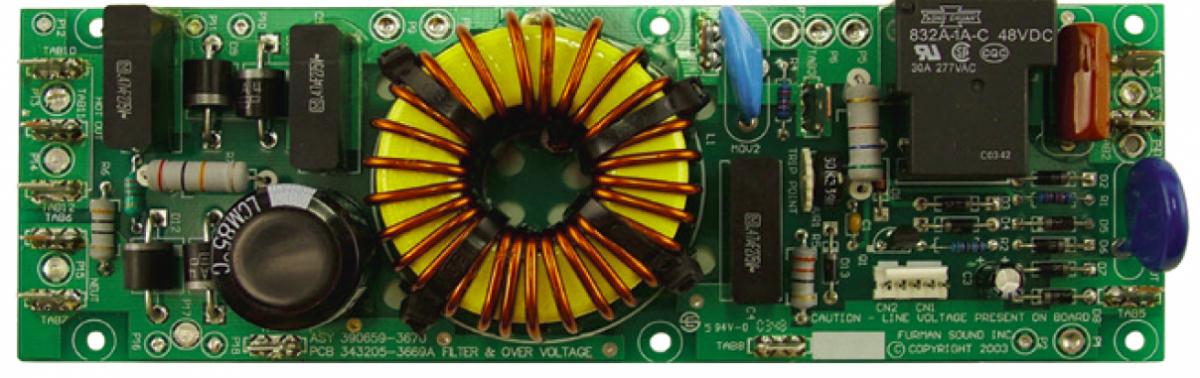
Featured image courtesy of Furman Power. This is the Elite series over-voltage protection board.
The Furman Power Elite series of power conditioners features a modular design that easily allows Furman to offer products with differing capabilities. Furman Power offers 3 versions of the Elite 15i
- The Elite 15i is the base version with series over-voltage protection, extreme voltage protection, and linear filtering of line noise. This device includes an AC voltmeter showing line voltage.
- The Elite 15 DMi provides the same power conditioning but adds a second meter showing the current being drawn. This is of interest if the outlet or the Elite 15 is heavily loaded. You can identify the straw breaking the camel’s back
- The Elite 15 PFi removes the meters and adds power factor correction to the standard protection functions.
Furman Power Elite 15i Impressions
Background
Although the house has full-house surge protection in the panel, I elect to use a second line of defense for the computers, network electronics, and audio and video systems. In the past, I had used APC power conditioners for this task but another 5 years had passed and it was time for battery replacement. Being tired of messing with lead acid gel cell batteries, I looked around and settled on Furman Power conditioners. After all, something robust enough to protect a $40,000 church PA should be good enough for home, right? Turns out, it was more than good enough. Product impressions and listening impressions follow plus a bit of EE tech.
Roon Take 2
Abstract
Over the past several months, I fell in love with Roon, its ability to stream my digital music collection in pristine full definition audio, the Allmusic artist and album commentary, and Roon Radio, the ability to play other things from my library like what I had been listening too. Nothing offers this combination of features. Nothing appears to have the commercial traction of Roon.
This article serves several purposes. First, it is my working notes from rebuilding my Roon environment, an iohyve managed FreeNAS behave VM. Second, I offer this in the hopes that it might inspire others to home brew. This article is a bit advanced. You really need to have a year or two of Unix system integration experience to pull this off. It is not a character by character, click by click recipe to build a Roon Server.
Those who don’t have system integrator chops but want a quality music server should consider the Roon Nucleus described in Reference [4]. Roon has developed these robust system specifically for the music serving task. They have adequate storage and computing resources to run Roon Server and are designed not to sneak crud into your audio system over the USB ground. If you’d like a fancy panel with that, Bryston, Linn, Naim, and others, will make pretty metal for you.
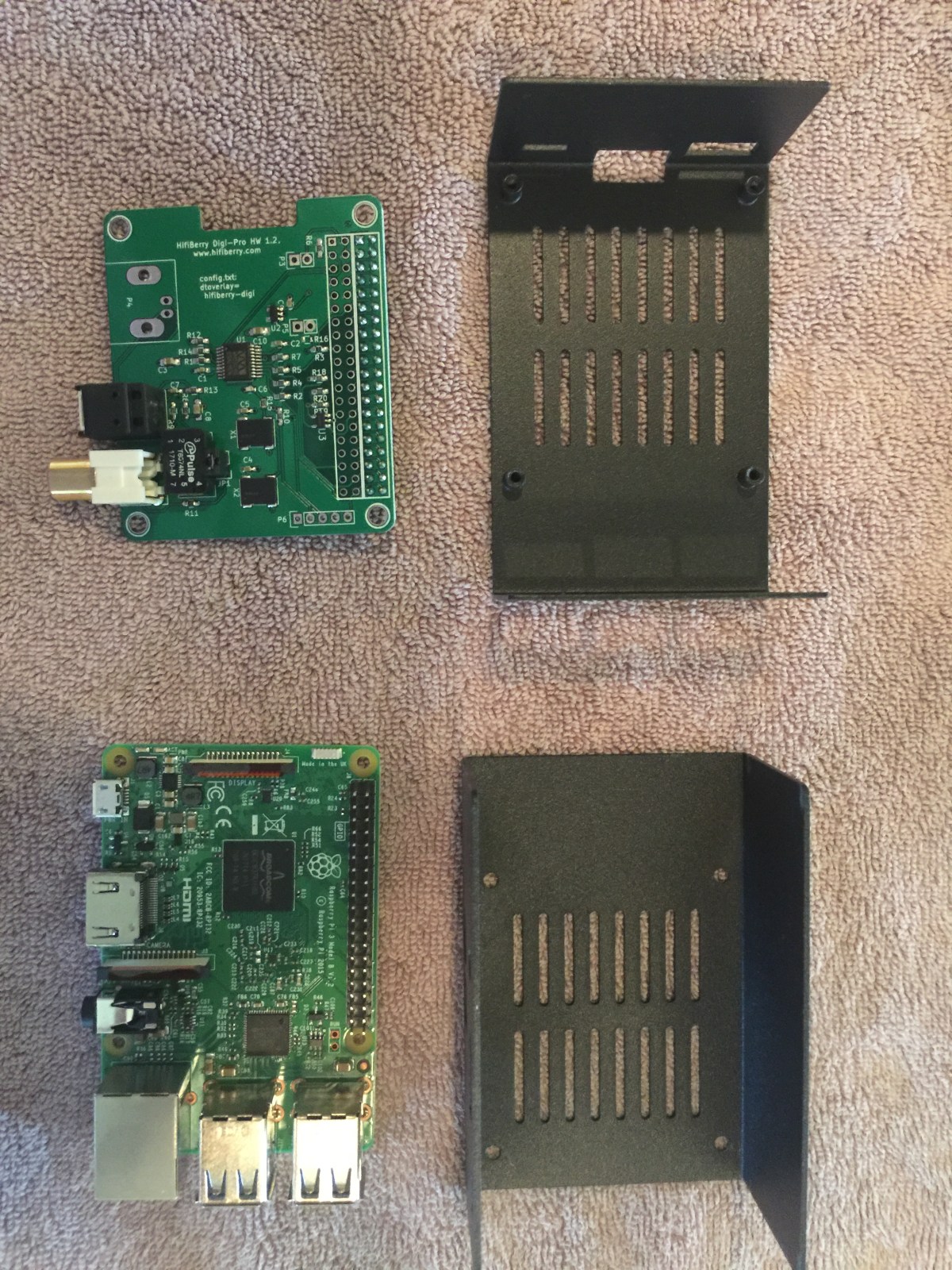
In poking about audio sites, I discovered Roon Labs Roon music server product. Roon is the music server I’ve been looking for for 20 years. Roon Labs has its origins in the Meridian Audio Solooes product over in the UK. This is a highly regarded embed music server organized in proper client server fashion. This post describes Roon, my Raspberry Pi build of a Roon Transport, and the commissioning process. Though not a step by step (see the references), this post includes some lessons learned during the build and setup, and the bandaging of my knuckles.
Listening Experience
After several weeks of living with Roon and the HiFiBerry Digi+ transport, I’m seriously taken with the product.
- The composer, composition, and performance reviews are of high quality, written in an engaging and informative style.
- Roon Radio is helping me rediscover records and tracks I had forgotten I had. Starting with a Thile-Meyer track, it worked through the album, into Fleck & Meyer, then to Nickel Creek, and Punch brothers and back to Thile-Mehldau. Poor dogs had to listen to acid grass and acid folk while I was shopping.
- The Digi+ kit just works with the metal case and HiFiBerry standard power supply. There’s no need for expensive linear supplies or unobtainium wire cryogenically aged in unicorn blood. The DAC is going to jitter buffer, retime, and reformat for rendering and any exotica outside this final device is unable to improve the sound. Save your money.
- Parasound got things right with the P5. The Optical and Coax inputs work well. USB input is reserved for disk mastering off my old Mac Mini and Parasound Z-Phono USB. This device has an ADC with line level and moving-mangent/moving-coil phono preamp. And it works as well as the P5 preamp and DAC. John Curl is a wizard!.
I really love the sound of this rig. If the album is well recorded and the mix is phase coherent, Brad Mehldau’s piano notes dance in space from string to string with a Brad and his Stienway are in the lounge sound.
You must be logged in to post a comment.