Thirty years of research led to the “mega-combo-burrito” filter used in Schiit Audio digital audio players. Mike Moffat originally discovered the ATT Bell Labs paper on which it is based while he was working on DSP for oil reservoir seismic survey processing. Mike used this filter in his Theta Digital DAC products. Schiit reintroduced the filter in Yggdrasi in the roaring ’10s.
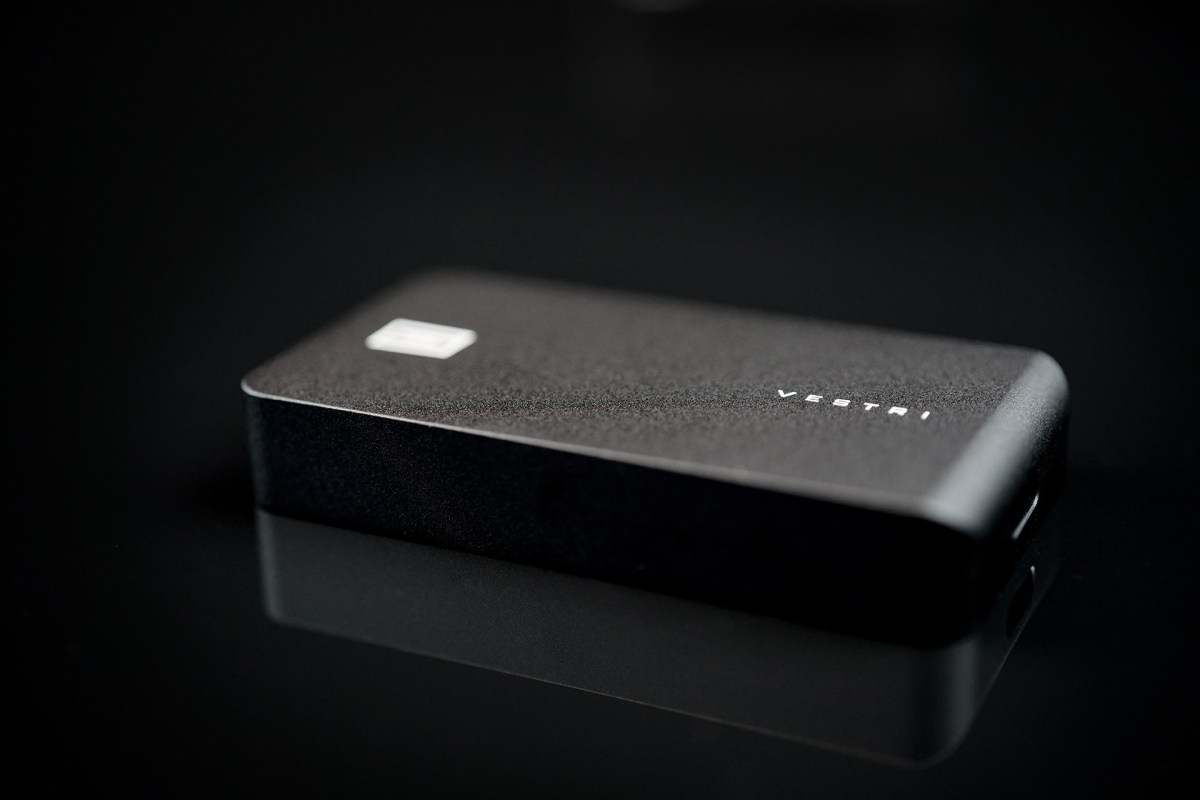
After debut in Yiggie, Schiit used this filter in each of its multi-bit (R-2R) DAC products. In 2026, this filter is now found in each music DAC offered by the company. Even little Vestri, a $99 dongle DAC/AMP combination. I’m a sucker for innovation so I bought Vestri.
The other thing I did this spring was to buy commercial streamers to replace the Raspberry Pi cobbler that was getting somewhat moldy. All were starting to experience strange stalls and other issues. Earlier, I auditioned a FiiO SR-11 stream receiver and found it a big improvement over the home brew.
But this article is less about my rig and more about how the DACS I have came to be. It is a long journey that begins with a fire, a fire at AKM’s Japanese foundry, sole source of the DACS Schiit had been using in most of its products. This forced a technical change that sparked strategic changes at Schiit. That’s today’s story pieced together from “Schiit Happened” articles at Head-fi.
Revisions
- 2026-06-22, Original
References
These are the Schiit Happened articles informing this post.
- “The World’s Most Improbable Startup”, Jason Stoddard, Head-fi.org
- The move from AKM to ESS
- The End of the DAC as We Know it
- Multi-bit’s end, Singular’s Beginning
- Jason tells the Vestri Origin Story at Head-fi
In the beginning, there was Asgard, Schiit’s first product begun about 16 years ago. Asgard is a high performance but modestly priced desktop headphone amplifier that introduced Schiit to the world.
As he was beginning Schiit, Jason, a published science fiction author, decided that maybe he could get a book out of “doing Schiit”. So he chronicled the founding of the company in blog format at Head-fi.org.
He later edited the beginning episodes for publication but continued to write a monthly column to promote the audio hobby, his company, and its products. The story of Vestri’s development is woven through the Schiit Happened articles.
It all began with a fire …
The fire was in 2021 or so at AKM in Japan. AKM was Jason and Mike’s preferred DAC and input receiver integrated circuit supplier at the time.
The fire resulted in a total loss of the only factory making the AKM parts that Schiit used in its personal audio product line. Jason reviewed inventories and found that they could wrangle parts for 18 months or so of production. Schiit was burning inventory faster than AKM was restoring from the fire.
This represented an existential threat to Schiit’s products so Jason, Mike, and Dave began to look for a new DAC supplier.The supplier search led to the ESS Sabre product line. ESS’s parts were very different than the AKM product line. AKM parts had a few options selected by pulling down pins on the chip by jumper or switch.
The ESS parts were option rich. The designer set options and adjusted parameters by setting the values in memory mapped configuration registers. These options let you select how the input was processed (resampled and filtered) and the output format and filtering. They also let you selectively disable parts of the processing to be performed external to the ESS part.
Schiit engineers began exploring the settings and found a configuration they liked for the desktop personal audio products but they remembered the DIY option that the parts offered.
Schiit develops “Singular”
Singular is the trademark of Schiit’s own in-house developed delta-sigma modulator. Years of blood, sweat, and tears went into this part that would replace the R-2R instrumentation DACS Schiit had been buying for Yiggie and Gumby from the Analog Devices. Obtaining R-2R parts for the statement products had become increasingly hard as defense and medical imaging were competing for these low volume parts. Being low volume, the parts were on allocation. And allocation was somewhat capricious. Schiit realized that supplies of them were ephemeral so developed its own delta-sigma modulator as a plan B.
Mike’s mega-combo-burrito filter, the new delta sigma modulator, and a new audio output card were prepared for an updated Yggdrasil.
Jason Proposes a Mash-up
At an engineering meeting, Yiggy Singular complete, Jason recalled that the ESS parts could be configured to allow external sample rate conversion, band limiting, and reconstruction filtering while continuing to use the delta-sigma modulator inside. Jason proposed that they do just this. Mash up a commercial delta-sigma modulator with the current Unison USB Audio 2, the mega-combo-burrito filter from the high end DACS, an ESS delta-sigma modulator and Schiit’s own analog reconstruction filter and line stages.
After some badgering, Jason’s vision caught hold with DAC engineers Mike and Dave. They found a way to use the ESS 9028 and 9018 parts with the mega-combo-burrito filter. And while at it, they found a way to remove the costly Analog Devices DSP by migrating the filtering code into the PIC-32-DSP used to run Unison USB and mind the device. They prototyped it and heard that it was good.
Mimir was born to replace the lackluster ESS Modius DAC, the Modi 5 was born with Mesh replacing multi-bit, the Magni-Unity for compact desktop systems had Mesh baked in, and Mesh DAC cards were designed for the larger modular desktop amps like Asgard and Joltunhelm. The Mesh DAC, in all its deployed forms, was well received. But one challenge remained, could a Mesh DAC/Amp fit it in a phone-powered matchbox?
Can We fit it in a matchbox?
That is, can we make a USB powered mobil phone DAC/amp? It turned out that they could. Jason figured out how to get the parts on a board. He developed the needed compact power supply and audio line stage, and Mesh was adapted to the lower-power ESS 9018 part. They laid out a board and set up the Yamaha SMD line to place parts and solder the board and they had a DAC in a match box. One that would work well with most headphones.
And the world heard Vestri and it was good!
Indeed. Reviewers had kind words for the various Mesh deployments with Mimir and Vestri receiving the majority of the YouTube reviews. Consistently, reviewers praise Mesh’s impulse response, the way it articulates drums, piano, vibes and other things hit with mallets like tympani.
Mesh’s ability to make a stereo image is especially striking in both speaker deployments and with planar magnetic headphones (what I currently have). And spectral balance is perceived as neutral with deep timpani and bowed bass, natural voices (when present), and a rich, extended cymbal sound. Oh, and it is dead silent, adding no noise of its own.
Toward Zero?
Mesh and Singular mark a corporate target-zig for Schiit. In the beginning, all of their products used merchant DACS, either ESS delta sigma modulators for the price-constrained desktop amps or R-2R DACS for the big-system DACS Bifrost, Gungnir, and Yggdrasil.
With the completion of the Mesh architecture, the personal system DACS continue to use merchant delta-sigma modulators. But will they always?
The completion of the Singular delta-sigma modulator development means that Schiit has its own in-house developed delta-sigma modulator IP that it can 0deploy on any adequately endowed field programmable gate array. The Singular architecture delta-sigma modulator is currently burned on a pricy FPGA from a supplier known for them. But other companies make FPGAs. Like Microchip and Infineon. Any FPGA that can accommodate the net-list should do.

 Dismal Manor Dispatches