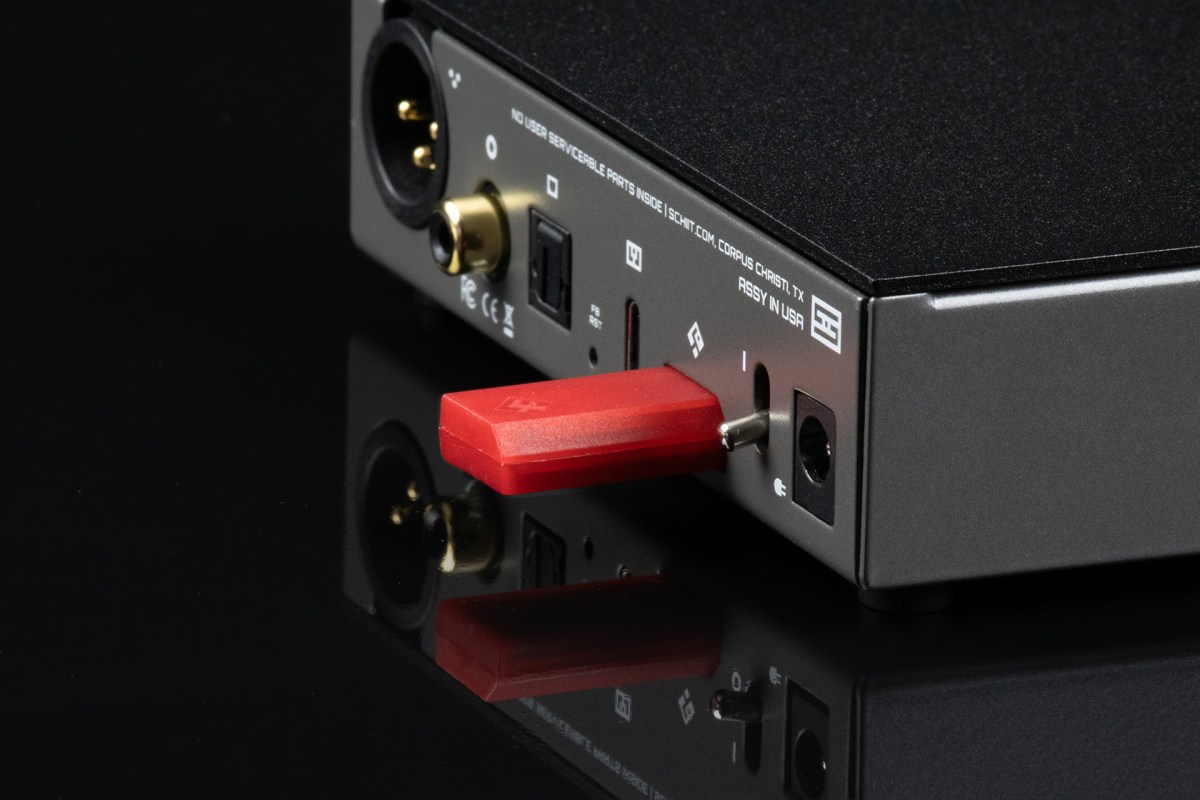
Schiit’s Jason Stoddard introduced Eitr-2 with the usual flurry of marketing, a new post in Schiit Happened at Head-fi and an Ask Me Almost Anything session on YouTube. Eitr-2 is an update of an earlier product that cleaned up a USB digital input. The new one does the same, but this time with Schiit Unison USB Audio 2 replacing the C-Media USB audio device. Today, I’ll write about why one might want such a thing … in a word, new life for old DACS.
Revisions
- 2026-04-01 Original. Yes, Eitr’2 is a real thing. I’m not clever enough to write an April Fools story. Jason Stoddard is but Eitr’s beginnings are typical Schiit. Something in overstock leading to a scheme to make bank off of the surplus parts.
- 2026-06-06 — Correct spelling of Eitr and fix typos.
- 2026-06-06 = Add 1812 Overture story.
References
- https://www.schiit.com/products/eitr-2 product page
- Jason’s Head-fi Eitr-2 origin story — only at Schiit
- Eitr-2 Ask Me Anything at YouTube
- Tchaikovsky, 1812 Overture, Mercury Living Presence LP, 1954, Reissue at Qobuz
Eitr-2’s origin story
Jason’s Head-Fi article explains the origins of Eitr-2. So the story has it, a few too many power supply transformers were ordered for a product. Something about cases vs each. And in the move to Texas, said parts were unearthed and shipped to Schiit’s new home in the sun. Being Schiit, a parts surplus is an opportunity to design the treasure into a product. But what can a AC 5 volt wall wart power?
And there was this disk transport thing that was a one run wonder. But it included USB to AES conversion with SPDIF, AES-3, and TOSlink outputs. Some cut and paste happened, a prototype board laid out, software built and tested, first articles were good, so a batch were built to gage response.
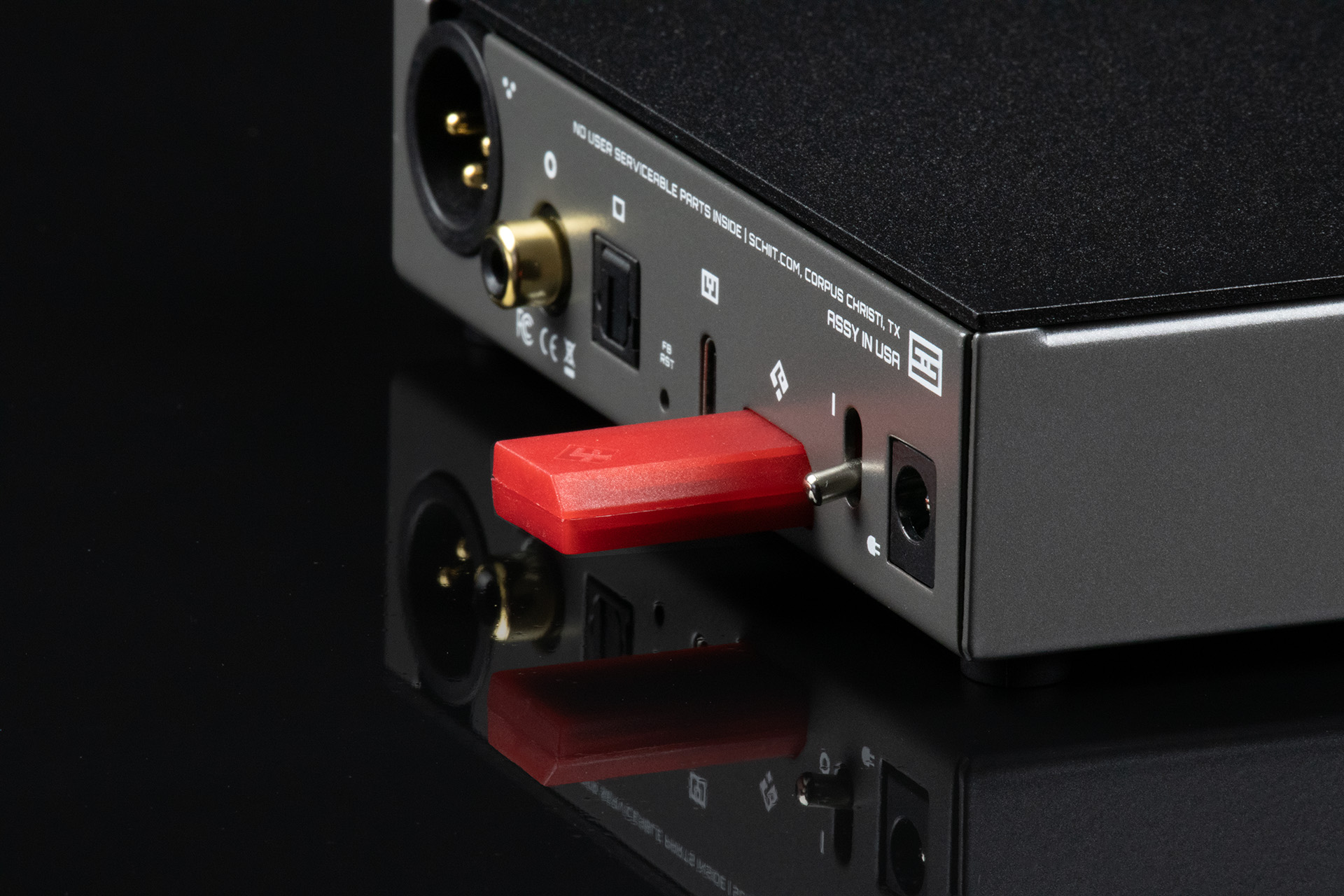
The image shows Eitr’s backside. At the left, an XLR output for AES-3, an RCA output for SPDIF, a TOSlink optical socket, the USB-C USB Audio 2 input, the Forkbeard transceiver, power switch, and power barrel connector to use up the transformer inventory.
The 5V transformer powers an internal power supply when connected. When connected, Eitr-2 reports as USB drawing 0 MA. When the transformer not connected, Eitr-2 reports as USB drawing 500 MA. Jason calls this scheme “linear override.”
Jason has not mentioned it, but it should be possible to use Eitr-2 to fan out a USB source to multiple AES-derived destinations by using more than one output. TOSlink is jittery so leave it for home theater. The other two are stable. SPDIF is the home version of Audio Engineering Society’s AES-3.
At church, the run from the mixer to the PA speakers is AES-3. Each of our Martin speakers has a daisy chain ouput. We use these to pick up the mains, wings, and under-balcony off a single mix patched to the AES-3 output. Each speaker does its own time delay and equalization so no drive rack is needed. AES-3 output is a big cost saver in installation sound.
The Dismal Audio Use Case
During lock-down, I bought a Schiit Gumby Multi-bit with some angst about the cost of that pig in the poke. It came, it was an ear-opener but just the beginning of a series of upgrades that saw a Vidar power amp replace a GAS Ampzilla, Freya+ replace a Parasound P5, and Maggies replace DQ-10s. That last change was dramatic.
At the time, I was using a HiFiBerry streaming endpoint and later an Allo Digital endpoint that had gone wonky. With USB-C Unson USB Audio 2 developed, Mike Moffat sheepishly confessed that he preferred USB to SPDIF. His way os saying that he’d made the USB source keep time correctly. On pitch without audible jitter (It shows up as glare. Jitter gives you that ’70s Phase Linear brittle sound back).
Somewhere along the way, I moved Gumby from SPDIF to USB, probably because I’d brought Magni-Unity into the lounge for a go and was too lazy to put the SPDIF back. Anyway, It stayed that way for a while. The USB input was flat and thin. And Mimir USB-C Audio 2 was fat and robust.
So people are using Eitr-2 to extend the service life of classic Mike Moffet DACS. A couple of us have bought for use with early Gumby. Jason dug out one of his early Theta Digital DACS that Mike had built back in the late 80’s. Still sweet playing Red Book and 48k audio.
Listening Impressions
In my case, Eitr-2 bridges a Pi-4 USB-3 output to Gumby’s SPDIF coaxial input. Suddenly, Gumby can play Blues Project’s “Projections” record without glare. Back in the day, the LP hurt until about “Wake Me, Shake Me”. The CD is bright, that was the band’s sound. Bright guitars and stage organ for a psychedelic electric blues sound straight out of the Filmore.
Etir and Gumby make the entire record listenable. The cymbal glare morphs into bright long-ride cymbal sound — that kind that raises 18 year old youth hackles. Sadly, father time has stolen that ability along with high end hearing.
When Mimr arrived, Gumby began to be ignored. Mimir seemed to have more spunk and depth. At the time, Gumby was lined up to a Raspberry Pi 4running Ropieee Roon Endpoint. The C-Media USB Audio 2 input was in use. Not a match made in heaven, Gumby sounded a bit spread thin. The image was flatter and somewhat threadbare when compared with Mimir’s muscular presentation.
And then came Fiio SR-11
In the 20’s Chinese audio firms moved into the streaming marketplace. Two, FiiO and Wiim, have introduced aggressively priced products after years private labeling for others. The FiiO SR-11 stream receiver is particularly well regarded . And it costs less than the Pi bits to make a Ropieee gadget.
Then John Darko took another look at FiiO SR-11 for a story. And John saw that it was good. So I had to buy one to replace a some Raspberry Cobbler.
It’s always Darko, innit? First, Gumby … give John that sale too.
So Gumby feed changed to SR-11 USB to Eitr-2 USB, Eitr-2 SPDIF to Gumby SPDIF. and The Moocher heard that it was good.
And I started listening to Gumby. Now, OG Gumby Multi-bit was holding his own with Mimir. And Gumby now has Forkbeard Harman loudness available. The trick here is to enable Loudness and lower the level some in Forkbeard. The Forkbeard will start doing the Harman thing.
Gumby vs Mimir, take deux
The new arrangement has Gumby and Mimir neck and neck. Both have vivid transient response, scary focus, and distinct placement in pan and depth. Mesh holds its own with Mike/Dave custom R-2R ladder multi-DACs as both share the mega-combo-burrito filter resampling and reconstruction scheme. The big difference is in the line stage. Mimir has a Jason Stoddard op-amp based balanced line stage while Gumby has a Jason Stoddard discrete differential balanced line stage.
With the SR-11 plus Eitr-2 line-up, Gumby is no longer the orphan on the audio shelf. When I plan to play a known good recording, I line up Gumby for the session. Gumby likes big orchestral works.
The 1812
Among my LP treasures, I have the 1954 Mercury Living Presence recording of the Minneapolis Symphony’s performance of the Tchaikovsky 1812 Overture. A bit of noodling in the LP shelf pulled it out — luck of the draw. With Skoll and Ortofon Blue, the LP is restrained as the engineers struggled to make the cannon shots fit the LP’s 60 dB dynamic range.
It had to be a heroic effort as razor blades, splicing blocks, and glue were involved. The cannon was copied for each shot in the score and spliced into a track at the beats where the cannon was to sound. The shots had to be properly placed in time and aligned with the orchestral recording. I can’t imagine how long they had wrestle at the tape editor it to do a few minutes work in Logic or ProTools for the reissue.
Capriccio Italian on the B side is a charmer. Yesterday, I found that 1812 still in print at Qobuz. I lined up Gumby and let ‘er rip. The remastering team nailed the mix, cannons orchestra, and bells! Bravo-Zulu Mercury boffins. And they opened the top and bottom up. The opening tympani shots have heft and bottom. The cymbal crash has sizzle but no ride. I think the percussionist muted the instrument’s fade out dynamic. Anyway, the digital reissue is coherent top to bottom and in the field recording narrative. It sounds like Capriccio Italian does on the LP.
The result is a modern version worthy of Mercury Living Presence’s reputation back in the day. Keep in mind that they did this with an 3-track custom magnetic film recorder (35 mm stock) in 1954. That robust media was properly stored and protected allowing a digital remastering. Mercury did Doratti’s old band proud. Cue this one up!


You must be logged in to post a comment.