Categories
Economics

Individual Income in the US

This article came about as a result of watching the Democratic Presidential Debate last Thursday. Senator Sanders and others rail about income inequality in the United States. Their chief complaint is that the rich are sucking up all the money in the country while middle class incomes are stagnant. Senator Sanders offers this problem, probably without any understanding of how income is actually distributed or what it costs to live in the US. In this post, I’ll look briefly at these two topics.

To this point, The Moocher is unaware of any specific proposal to curtail wealth accumulation by the upper extreme of the income distribution.

Revision History

I revised this article to describe the relationship between income density and income distribution and to attribute and describe the social classes used later in the article. I also added the statement that Senator Saunders had not proposed a way to address income inequality.

The Key Points to Take Away

The basic thesis of this article is that the real problem is not that there are statistical tranches of income or that increasing income and inheritance taxes on those earning more than $1,000,000/year will not, by itself, change the fundamental structure of the economy. The problem is that those at the bottom of the economy, about the bottom half of individual incomes are just getting by or struggling. In this structure, the cost of a basic standard of living is out of reach of over 25% of our population, our underclass and our working poor.

If you use the numbers at the end of this post to estimate an income for a 2 adult, 2 child, stay at home mom household, you get a value of $70,000 for a secure income with recommended savings rates. Reference [1] shows that the 2012 median household income was $62,000 so less than half of our households meet this standard.

Our economy is an emergent phenomenon resulting from literally trillions of decisions occurring each day. Our affordability trap results from the way these choices fit together, it is an emergent property that results from all of the trade flows in our economy, particularly those influencing the cost of housing, health care, transportation, food, and energy.

I think we will be hard-pressed to find one simple lever to move to fix the personal income/cost of living mismatch. These flows are continually changing in response to new means of production, new desirable goods and commodity costs.

Structural changes (increasing manufacturing automation  and clerical task automation) are reducing the number of jobs that yield a working class and middle class incomes . This is largely responsible for the erosion in middle class jobs.

Big C Communism’s attempts to have a centrally planned economy, i.e. to control these emergent phenomena, were a miserable failure. Communism created artificial shortages and excesses as a result of the inability to predict the proper flows of goods and services while attempting to control them. I don’t expect that the US Congress will do any better. The problem is just too complex.

References

This article wouldn’t be pseudo-scholarly without references so here are a couple.

  1. http://politicalcalculations.blogspot.com/2013/09/what-is-your-us-income-percentile.html#.VsIlxDauDNQ
  2. https://en.wikipedia.org/wiki/Standard_of_living_in_the_United_States

A bit about statistics

Statistics offer one way to make sense of your income. Where are you ranked in the total US population of incomes? There’s you, those who make less, and those who make more. Reference 1 shows the cumulative income distributions and has a calculator that will figure out your place in this spread.

Their figure 1 shows the total US income summed up from zero to $1,000,000. Your doctors and dentists are in the $200,000 to $400,000 range so this figure includes them but it excludes entertainers, paid athletes, and corporate and hedge fund executives. But it does catch about 96% of the country’s population. Those lofty folk not included account for 4% of the population.

Where the data comes from

The US Census has several sources of data. First it conducts annual surveys. Second, the Internal Revenue Service makes anonymous income data sets available to other agencies, researchers, actuaries, and such. The data used in Reference 1 is very reliable.

The standard of living results appearing in Reference 2 are also taken from Bureau of Labor Statistics and Census Bureau compilations of results. These too are reliable. The thresholds I cite at the end are from memory and, look as I might, I’ve not been able to find a source for them. But they do square with Reference 2.

Average and Median

The figure is plotted on a semi-logarithmic scale. Researchers and engineers use this plot when one of the variables has a large range and the other has a small range. In this case the Y-axis is percent of total income. The X-axis is the log of individual income. So the vertical axis is “natural” while the horizontal axis is “compressed” to fit on the page.

Those looking at the reference will see that US individual median income is $27,000. I’ll come back to this.

If you look at the plot, you see two horizontal lines that mark the median income and  the average income. The median income is that mythical income that divides the population into two equal parts. Half make less while half make more. The average income is the total income divided by the number of recipients. These two are different with the median lower than the average. This happens when the distribution is skewed with significantly more of the samples being less than the average value than greater than the average.

The lazy-S curve is what statisticians call a cumulative distribution function. The number plotted at each income level is the total percentage of income samples up to that point. In this plot the curve shows the percent of total samples, not the total income. That curve would have a similar shape but would be plotted log-log and is difficult to interpret. To give an example of how the curve works lets consider a couple of ideal cases.

  • Everybody makes $10,000. The plot would show zero up to $9999. At $10,000 it would step to 100%.
  • In reality, US income distribution has the shape shown that reflects a most common individual income near $25,000. It rises sharply to the peak and trails off more slowly with a long tail at between your dentist and your favorite corporate CEO. The cumulative distribution continues to rise because the total number of incomes is continually increasing from the start of the dataset to the end of the dataset.
  • The curve is steep where there are lots of samples and relatively flat where there are few samples, that is at the left and the right ends. The steeper the curve, the more samples in that slice. That gives the S-curve shown. The slope of the curve is the percent of incomes at that level (the value of the slope vs income is the income density curve. The income distribution curve is the integral of the density curve.)

Percentiles

Statisticians often divide groups into subgroups. One of the most common techniques for expressing this division is to talk of percentile levels. Median income is the 50th percentile income, half make more while half make less. 90th percentile income is that amount at which 90% make less and 10% make more. 99th percentile income is that point at which 99% make less and 1% make more.

The funny thing about statistics, is, that no matter what you do, 50th, 90th, and 99th percentile incomes will always exists. That’s simply statistics. Being on one side or the other implies nothing about your character, your hard work, or anything else. That’s just where you are in the 300 million of us.

Class Income Levels

Looking at Dennis Gilbert’s class model in Reference [2], about half of our population are in our working class, working poor, and underclass. From the tables, our working class are about 25% of the population. They have safe housing, adequate diet, and reliable transportation to work but are unable to save significantly. The working poor and the underclass together are about 25% of the population. About 1/8 of us are working poor living in compromised housing, nursing a failing vehicle for transportation, and daily life is a struggle. About 1/8 of us are under class unable to work regularly or unable to work.

The researchers cited in Reference [2] use living conditions, not income level to determine the numbers in the working class, working poor, and underclass. In his model, the underclass are not self-supporting, the working poor have high economic insecurity and risk of poverty. The working class are just scraping by with adequate housing, food, and health care but with limited savings It is coincidence that these levels extend up to the $27,000 median individual income level. The real tragedy is that 1/4 are just getting by, 1/8 are struggling financially and 1/8 are living in serious poverty and 1/4 are unable to save for retirement.

Income Thresholds

A few years ago, I heard an NPR story that gave these income thresholds.

  • $30,000 provides basic subsistence
  • $40,000 allows some saving for retirement and misfortune
  • $10,000 additional is required for each additional dependent sharing a household

The $30,000 provided safe housing, diet, and basic health care and transportation to support travel to and from work. There were no luxuries. The additional $10,000 allows saving for retirement and emergencies. The third amount is the marginal amount needed to add a child or a stay at home adult to the household. It covered the marginal costs associated with the added individual.

A family of 4 with a secure standard of living requires $70,000 in income from one or two wage earners.

The striking fact that stands out in my mind is that half of us earn too little to live independently at a basic standard of living. This is the real problem with income inequality: that 50% of us earn too little to live independently.
Categories
Recipes

Southern Chicken Bog

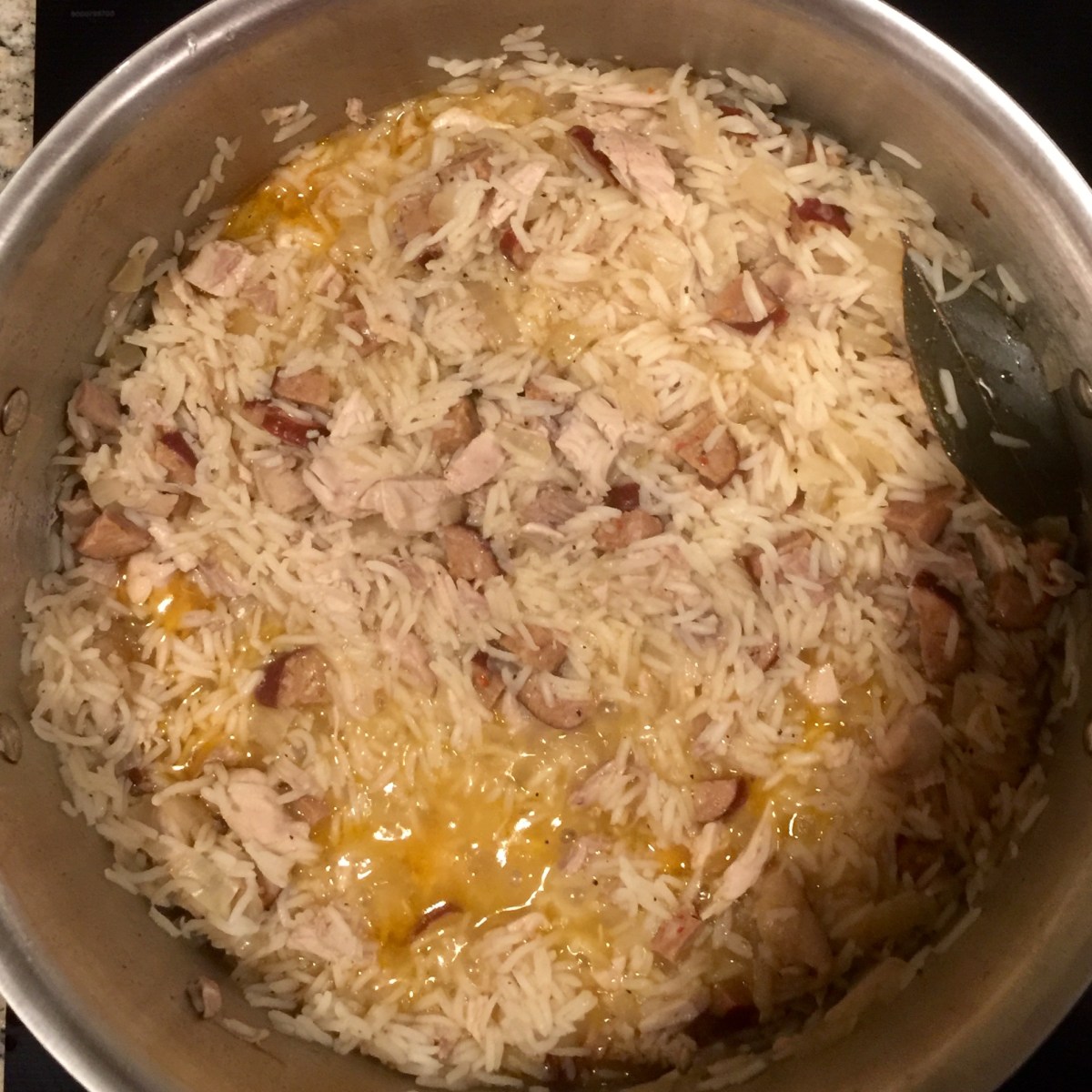
Luke Murden, Whole Foods Cooking Coach, demoed this recipie in the summer of 2015. It is quite tasty so I kept it until I had an urge to go off the vegetarian reservation for a while. With 3 batches of Food52 Lentils and Sausage soup left, it seemed like a good time to make this classic.

I suspect that this recipe is good with brown Basmati rice but I recommend making it first with white rice as directed. The change to brown rice requires adjusting the cooking liquid up. Luke’s recipe is for 3 rice to 8 liquid. The normal white rice ratio is 1 to 2. The normal brown rice ratio is 1 to 3. The process of cooking the chicken may reduce the water some. Then again, there may be a reason this is called chicken bog. I don’t recall it being soupy as Luke made the demo in the pressure cooker and halves the liquid for this method.

This recipie is for 4 omnivor servings. To serve 8, double everything. I made mine with a whole softball sized sweet onion. Onion is good.

A 6 quart Dutch oven should hold either 4 or 8 servings. I made 4 so I wouldn’t be awash in leftovers.

Servings and Macronutrients

This recipe makes 4 to 5 servings of about 1 pint. I used UnderArmor’s My Fitness Pal to calculate the macronutrient analysis. Although the salt number is high, the dish did not taste salty.

Those concerned about salt can skip the Better Than Bouillon which is quite salty. The dish is fine without it as I discovered by accident.

Those concerned about fat can reduce the fat by removing the chicken skins before cooking. I’d recommend using the butter as directed. And do use real butter as it is trans-fat free.

  • 855 Calories
  • 37 grams fat
  • 70 grams carbohydrates
  • 55 grams protein
  • 1700 mg salt
  • 470 mg potassium

Ingredients

This list of ingredients is 1/2 that of Luke’s original recipe to feed 8. You can go long on the onion but observe the meat and rice amounts and liquid

  • 4 chicken thighs, 1 per serving
  • 1/2 pound (1/8 pound per serving) of smoked sausage
  • 1/2 cup of chopped onion
  • 1/4 cup butter
  • 4 cups chicken stock (I use Better Than Boullion)
  • 1 1/2 cups white rice

Spices

This spice list makes 4 servings

  • 1 teaspoon salt
  • 1/2 teaspoon black pepper
  • 1/2 teaspoon ground red pepper
  • 3 bay leaves

Preparation

this recipe does not have a sauté step. I don’t believe it would hurt to sauté the onion, brown the chicken, and brown the sausage. If you do, do these processes in the Dutch oven using olive oil as needed.

  1. Dice the onion
  2. Dice the sausage into 1 cm pieces
  3. In a stock pot or 6 quart Dutch oven add the water chicken, sausage, onion, butter, and seasonings. Cover the pot and bring to a low boil for 40 minutes.
  4. Remove the chicken, let it cool, and pull it from the bones. Chop to 1-2 cm length if needed.
  5. Discard the chicken bones and skin.
  6. Add the rice to the pot, cover, and return to a boil for 10 minutes.
  7. Reduce the heat and simmer until the rice is done. Maybe 10 more minutes for white rice
  8. Remove the bay leaves and fluff the rice using a fork. Stirring will make the rice gummy which is not Southern!
  9. Return the chicken to the pot. Fiddle with the salt and pepper to taste.

Serve with your favorite adult beverage. I think a red wine would be best given the lavish amount of butter in this brew. A good malty or hoppy beer should work well also.

Review

Southern Chicken Bog proved easy to prepare following the directions above. In my preparation, I forgot to add the chicken Better Than Bouillon but the end result was still pretty tasty. It is important to use a smoked sausage as the smoky flavor makes the dish distinct. Serve with two vegetables and red wine or a hoppy beer.

Categories
My blog

Blog Makeover

While porting ucnorfolk.org to WordPress, I learned about WordPress short codes. Short codes are magic strings that cause WordPress to insert content in a post or page.

References

  1. https://en.support.wordpress.com/shortcodes/

Motivation

As I began writing the blog, I had a bit of a dilemma: where did I put something? If it was a blog post, it disappeared into the archive after a few posts. If I made a page, the material never appeared on the front page. I encountered this first when I decided to torment my aunts with the Yankee Greens recipe. I needed to keep it around so I could make it again.

WordPress offers a solution

You can assign a post to a category. WordPress can retrieve posts by category. There’s a widget for that in the primary sidebar to the left. But did you know that WordPress can insert stuff into posts for you? Well, It can.

WordPress short codes let you do this. Short codes are magic strings inside square brackets that tell a WordPress plugin to do something for you. One of the things it can do is display posts that match a criterion like “Category”. Interestingly, I had been assigning my posts to categories.

WordPress plugins make short codes available. With luck, the plugin’s documentation describes the short codes that it offers and explains how to use each. The WordPress.com reference provides a list of of short codes available in a WordPress.com site with links to the user instructions for short code.

The display posts short code plugin causes WordPress to retrieve a list of posts by category that it inserts into the post or page. Short code arguments tell the display posts plugin what to retrieve, how many to retrieve, and how to format the results. Problem solved. Write a page that pulls post excerpts by category. Now I had a page with abstracts of each post assigned to the category.

Other short codes let you interact with Facebook, Twitter, YouTube, and others. You can have a lot of fun amazing your friends with creative use of short codes in pages, posts, and text widgets.

New Navigation

As I began making new top level pages for each category I wanted to feature, I discovered that I had way too many of them for the main menu. So I made a page about the Moocher’s interests and made the category pages subpages of it. Now folks can find stuff I think is important that I’ve buried in the the compost heap of the blog.

Categories
My blog

Blogs I follow

This New Years Day I decided that I should list some of the blogs that I follow on my blog. The list is somewhat eclectic including some interest blogs and some friends.

Blue Virginia

Blue Virginia is a blog about Virginia politics written from a democratic or progressive point of view. It is a good source of news about the doings of the Virginia Commonwealth legislature and the state officers. This blog does not have many kind words for the Virginia Republican Party or the national Republican Party. Sorry about that.

Energy From Thorium

Kirk Sorensen, former NASA engineer working on power systems for space exploration, writes this blog. Kirk Sorensen is an engaging speaker and an engineer’s engineer. He left NASA to form FLIBE Energy, a start-up company working on development of the thorium fuel cycle and molten salt liquid fuel reactor development.

This is an important future energy technology that can be taken commercial over the next decade. Because the fuel is molten, the reactor has already had a meltdown. It is designed to work that way. Because molten salts are extremely stable, there is no danger of a fire or other processes that would disperse spilled fuel. And because of the choice of fuel, U233, no bomb suitable isotopes are formed and the reactor transmutes long lived isotopes. Spent LFTR fuel need be stored for only 100 years or so for radiation to decay to background levels.

Dick and Libby

Dick and Libby Mills are retired friends cruising the US east coast, Great Lakes, St Lawrence Seaway, and US Gulf coast. Dick is a former power engineer holding key patents for overspeed protection of utility scale steam turbine generators. Dick was also a pioneering developer of nuclear power plant operator training simulators working on the Dresden I simulator while at GE. Dick’s last gig before retiring was as energy management system manager for the New York Power Authority, the New York State independent system operator responsible for distributing electric power within the state.

Adrenaline Racing

A fraternity brother (50-ish) is a world class dingy sailor ranked in International 14 boats. Kirk competes at the national level and is ranked in the top 20 or so sailors in the class. In 2014 he and some mates bought Adrenaline, refitted her, learned to sail off shore, learned race planning, and raced the boat in the 2015 Transpac. The blog is about their adventures in the 2015 race.

Bella and Friends

Samantha Whiting in Banbury, Oxfordshire, UK — the middle kingdom, writes this blog from the point of view of Sam’s BellaBob, her greyhound. Sam does a good job — keeping it simple, staying in character (mostly), and never lapses into bad dialect. Great fun teasing BB on Facebook where she has a pet page. BellaBob is famous for her doggerel. And silly selfies. And Charlie the Yorkie Terrier and Miffy the scratchy cat.


Categories
Home automation

TrackR Whines on Facebook

I’ve been seeing a lot of whines posted to TrackR Bravo adverts on  Facebook. These seem to be from people who bought one or more TrackR Bravo devices expecting magic. Their things would just appear on the app map.

Categories
Photography

Adobe Lightroom and Apple Photos

The Apple application architecture that seamlessly integrates your Mac with your iPhone and iPad is a strength of the Apple product line largely unknown to folks who have not bought into iThings. In the past, Apple offered Aperture to serious amateur and professional photographers and iPhoto for recreational photographers. With Mavericks, Apple replaced the earlier products with Photos, more capable than iPhoto but not as capable as Aperture. To close the gap, I subscribed to Adobe Creative Cloud for Photographers. Can Lightroom and Photos coexist? How?

Categories
Greyhounds Home automation

A few days with TrackR Bravo

Bluetooth item trackers are all the rage if the Interwebs are to be believed. These gadgets are dog tag sized devices designed to be tucked into a wallet, stuck to mobile items, or  added to a key ring. They are basically Bluetooth 4 beacon devices that advertise their presence. To be an item tracker, they need to do little more. Just play Marco Polo with a mobile or other compatible Bluetooth device. About 5 or 6 companies make these things with another entering the market every few months. Most fundraiser on Indigogo so that is a good place to keep an eye peeled for new developments in this space.

References

  1. https://www.thetrackr.com/?ref_code=Xp0F6&utm_source=auto-emails&utm_medium=followup_email&utm_campaign=seven_days_after_shipping
  2. https://www.indiegogo.com/projects/wistiki-the-first-connected-jewels-ever#/
  3. https://www.indiegogo.com/projects/trackr-atlas-effortless-organization#/
  4. https://en.wikipedia.org/wiki/Bluetooth_low_energy

The first is a link to a TrackR Bravo referral code. The second is a link to the Indigogo campaign of the European upstart mentioned below. One of the perpetrators designed Steve Jobs yacht. The third is a link to the TrackR Atlas Indigogo campaign. The fourth is Wikipedia on Bluetooth 4.0 protocol.

Web reviews can be stale

Things are highly fluid in this space, especially with the application. Most brands get the hardware right and the app usable then go to market. Once launched, they continually improve the app to fix problems and refine the user interface. Last season’s review on Engadget or Gizmodo will not reflect the current product experience.

Personal Opinion

My personal opinion is that the advertising copy writers are overselling these devices but that they can be useful if you understand their capabilities and limitations and use them within those capabilities and limitations. I’m writing this article to offer you my understanding of these devices and their application in hopes that this will spare you some disappointment and help the product category find its niche.

Apps and beacons don’t currently interoperate. It would be nice if a single app would support multiple beacon families because manufacturers are tailoring the devices for different applications using different packaging. For example, one is credit card sized for use in wallets. Another is packaged for pet tagging. Some are thicker to have longer battery life.

Not for life-safety use

The Bluetooth beacons don’t work well enough to serve as a wander alert for people or pets. The desire to keep them low power and small prohibits putting a GPS receiver and cellular radio in the device which means that location must be indirect. When a receiver hears a beacon, it reports its position and the beacon ID to HQ and HQ notifies you if it is one of yours. This is what TrackR calls “crowd GPS”. It is not a substitute for the real thing when it comes to life safety.

Dave dips a toe in the waters

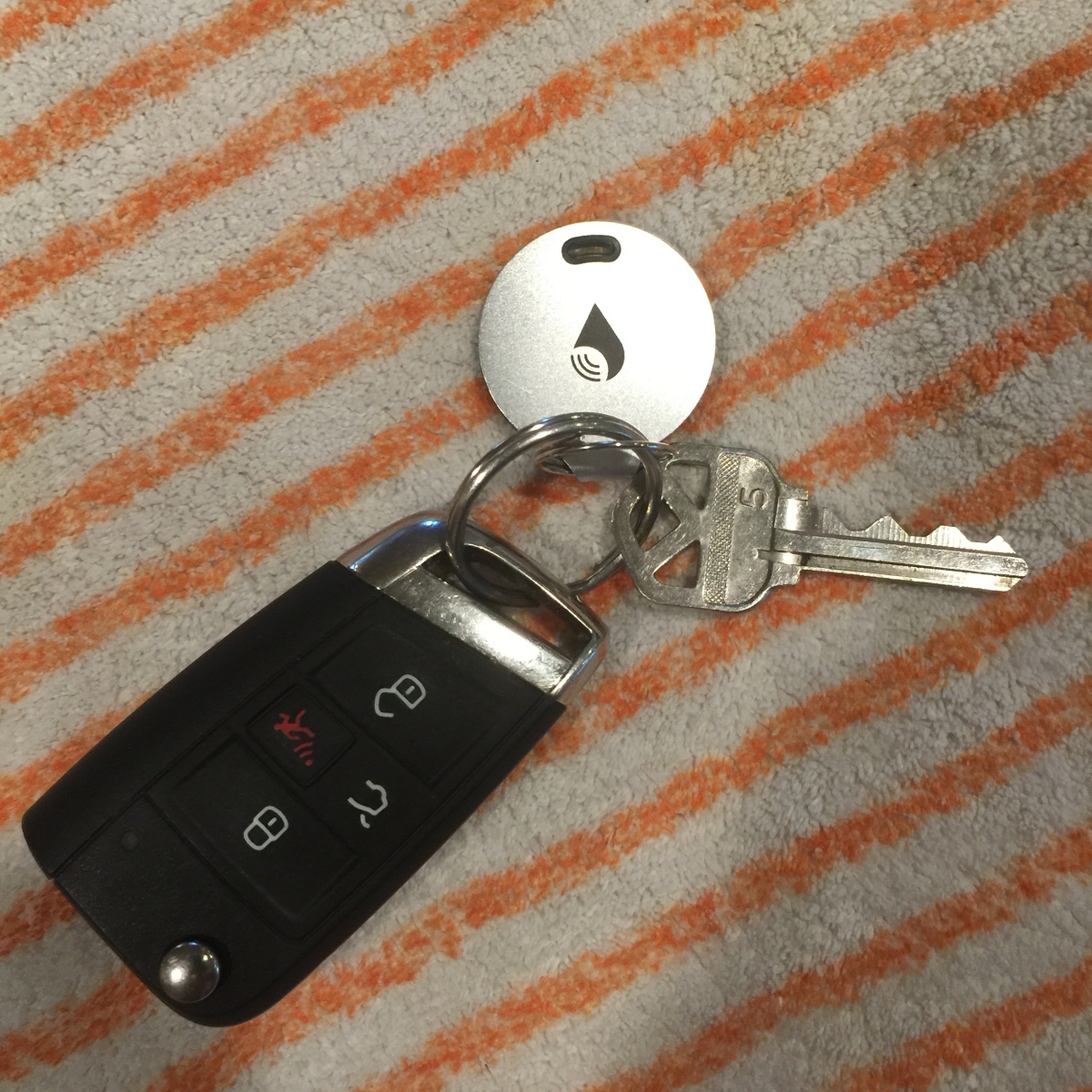
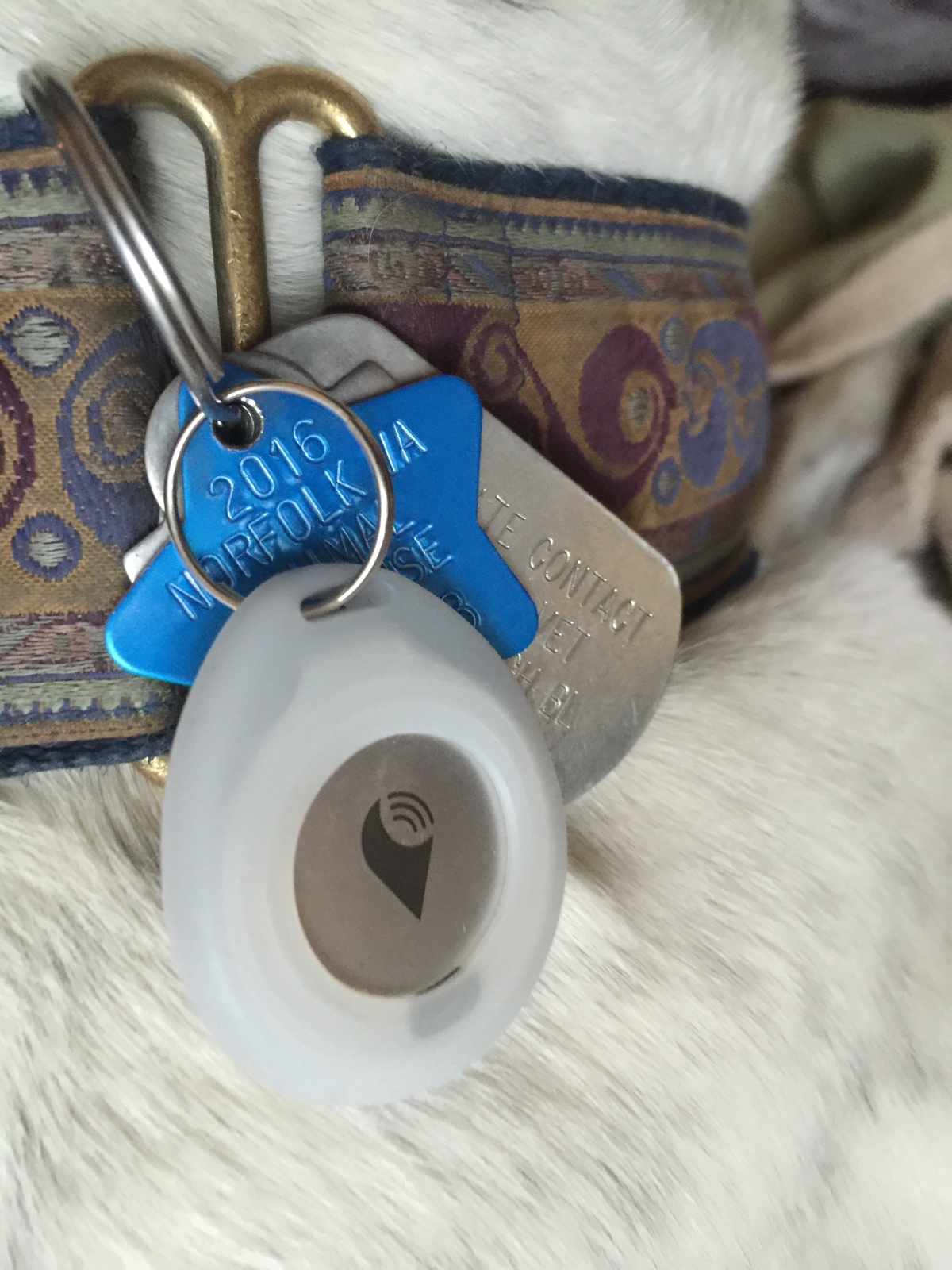
TrackR, one of the better known brands in the US, held a buy one get one sale between Thanksgiving and Christmas. Having purchased a new car that has high tech keys, and having successfully laundered one of my two keys (it lived, this time), I decided some precautions are in order. Can a Bluetooth tracker be helpful? So I bought 2 pair, one to go on the keys and one to go on the houndies.

My trackers arrived shortly before Christmas so I downloaded the app, set up the trackers one at a time so that they would actually be attached to the things they were named for, and gave them a try.

The pairing process is simple. You download the App, get an account from the manufacturer, and pair each critter. The pairing starts with the app and the mechanics are app specific. Basically, you tell the app to listen for a tracker, you press a button on the tracker to start it advertising, and the app finds and logs the device. The app will ask you to name the device. Once the device is named, setup is complete and you can move on to the next.

What the beacons do

The beacons announce themselves and listen for the controlling terminal. On command from the controlling terminal, they begin chirping. On a second command, they stop chirping. The beacons are always announcing at a low rate to save battery while allowing themselves to be detected

The controlling terminal listens for the beacons. The Bluetooth 4 protocol lets the beacon report the transmitted power. The receiver includes the received signal strength along with the packet. This lets the terminal indicate if the beacons is near (within a meter or so), close by (within 5 meters), or distant (can be heard but faintly). The protocol does not allow the terminal to determine a bearing or a range.

How are beacons most useful?

I bought my TrackR Bravos with the intent of finding the car keys when they went missing and with the hopes that they would prove useful with my hounds.

Locating hounds

The Marco Polo process is slow and the radio is weak so it is unlikely that a Bluetooth tracker will prove useful in locating a walkabout houndy, I was hoping that I could tell if Nick was exploring a neighbor’s back garden from the street but the radio strength and dynamics just don’t permit it to see a moving greyhound. So dog recovery the old fashioned way, check each back garden.

Locating keys

Trackers do work well for the missing key problem however. Tell missing keys to sound off. If the sound comes from the washer drum, you’ve just averted trouble. The TrackR Bravo makes a distinctive chirp using an FM modulated pulse that rises in volume and frequency. You won’t mistake it for the fridge door ajar alarm, the oven timer, or incoming SMS alert. It is distinctive but not very loud. It might be hard to hear in a noisy environment or across a large room. And not from the neighbor’s back garden. But it can be heard from a pocket,  a laundry bin, or washer drum with the door open.

Locating your mobile

Location works both ways. Pushing a button on the TrackR fob will cause your mobile to sound off. Much more convenient that firing up Find My iPhone if you know the phone is in the house. You may have to send the wake-up in multiple rooms but it does work. The ping is different than the one Apple uses but it can be differentiated from most normal phone noises.

Digression on modern car keys

My VW keys have survived a run through the wash but the dryer will probably fry their brains. Modern keys have RFID transponders and near field transponders that open car doors and allow you to start the car. The transponder ID is matched to the vehicle and the vehicle responds only to the registered transponders. That means you can’t go to Home Depot to have a key cut for a few dollars. It is back to the dealer for expensive parts and a hour of tech time to pair the new key to the vehicle. And if your vehicle is old, you may have to wait for Black Forest elves to make a replacement. So caution is good.

TrackR Atlas, Greyhound Doorbell?

TrackR has an Indigogo project to raise funds for a device they call TrackR Atlas. Atlas is a night light sized plugin terminal that listens for beacons from all manufacturers. Put one Atlas device in each room to be covered and it will tell you by WiFi what can be heard in that room. The app can be configured to give an alert when a devices enters and leaves Atlas’s earshot.

So, what might this be good for? A greyhound door bell? They never remember to ring the bell. And they may bark once to call you to the door. The bark is optional. So, what happens if I plug in a TrackR Atlas on the back stoop? Will it tell me when a houndy comes up on the stoop? Probably. Most of the time. I can come to the door and let them in.

TrackR Atlas is the first product brought to my attention that will report other maker’s beacons. If you have a Tile or one of the European brands, you can use them with TrackR Atlas. One French brand has an Indigogo to launch their products in the US. To differentiate themseves, they chose to use a bigger battery and go for 100 meters range vs the 10 meters or so that a TrackR Bravo can manage.

So Won’t Ring Announce the Dogs?

I had considered using a Ring doorbell for this task but the motion sensor gives a fair number of cry wolfs from passing traffic. Having an emitter on the hound solves the motion detector cry wolf problem. If only Tracker would make the TrackR Atlas device outdoor temperature rated. Basically, it needs to work from -40F to 120F or so, operating temperature, not storage. Mine is under canopy sparing it the summer sun. It does not need to be drip proof as electrical code outdoor outlet assemblies are required to be drip proof in the US.

Crowd Location

So, what happens if your dog goes walkabout at the park? That’s where “crowd GPS” comes in. Each TrackR app listens for all TrackR beacons, not just the ones paired to it. When a mobile hears a TrackR, it reports the TrackR UUID and the phone’s location to TrackR world headquarters. World HQ tells your phone where your beacon was heard. This mechanism has successfully recovered walkabout dogs in an urban environment.

One of the TrackR sales pages shows where TrackR apps are active. Just where they are, no identifying information. This gives you a feel for coverage in your city and neighborhood. There are several instances of the App active in within a few miles of home. Not enough to find a walkabout dog.

Categories
Web hacking

Do It Yourselfer’s Guide to Web Hosting

A couple of years ago, I wrote a guide to web hosting for small non-profits having relatively simple content management system based sites. Since then several acquaintances have asked about personal web hosting for DIY efforts by folks who are not software engineers. This article explains the planning you need to do in the beginning and why I use WordPress for this DIY site.

This guide is intended to be of some service to my artist, dog breeder, and hobbyist friends making promotional sites or personal communications sites like this one. There are many hosts out there but most of what is written evaluates hosts for use by small agencies and solo web services consultancies. There is little for the DIY community.

Categories
Holiday Letter

2015, That was the year that was

That Was the Week that Was is an old ’60s TV show of news satire. Robert Frost, BBC refugee, hosted with his British accent, prescient interviewing skills, and imperial irony. The show suggested the title for the 2015 year end post.

Categories
Greyhounds

Got Ya Plus 13 Months

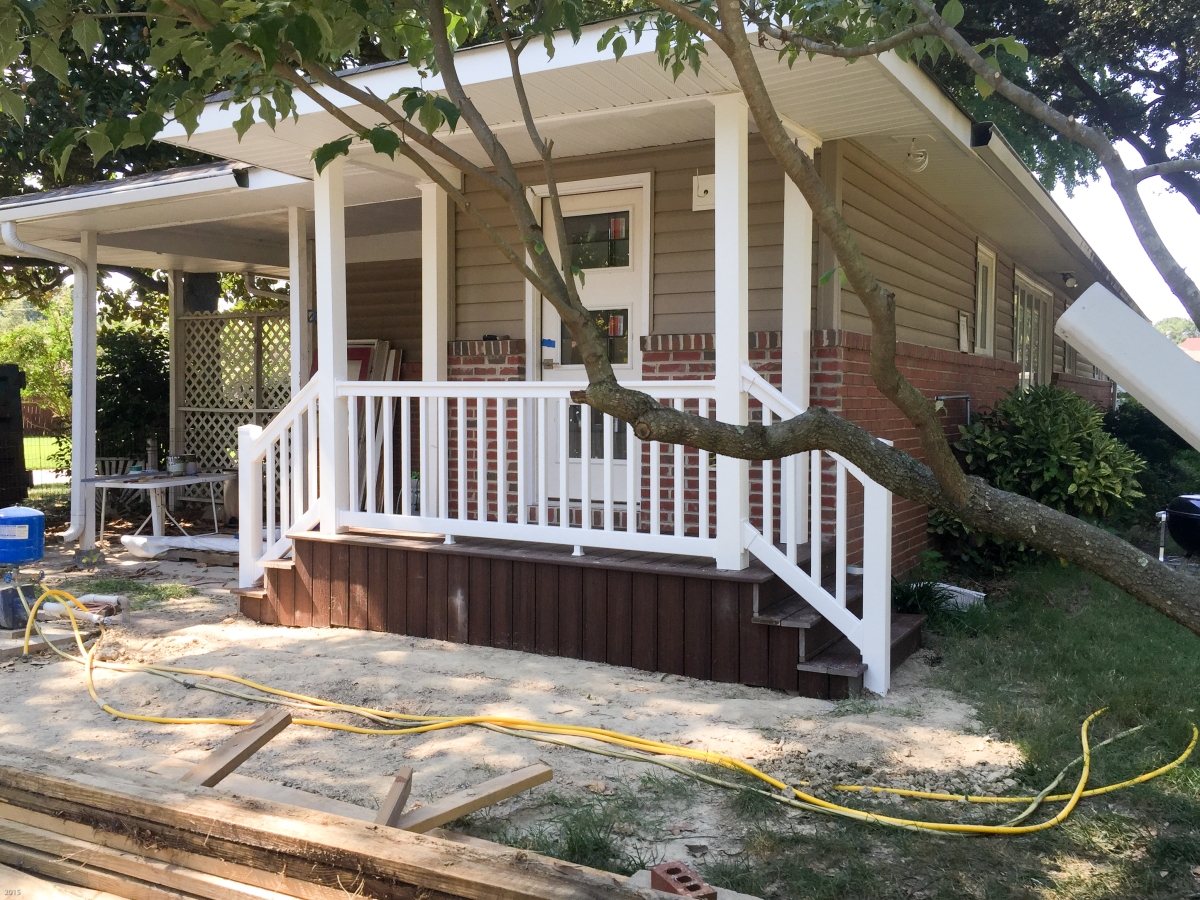
I’m late. I meant to write this in October but got distracted by contractors.

Missy, Nick and I have been together for 13 months and she’s been an absolute joy. She’s finally felling pretty settled in as indicated by a drop in nervous play, chewing, and funky emissions. She’s still an active goofball but she’s happy to have a yard in which to romp, loves to hang out on warm evenings, and takes great joy in trolling school kids, bicyclists, and motorcyclists.

Bedtime Dog

At sunset a neighbor would walk her terrier mixed breed. This stumpy little guy was white with black spots and walked the street head out and determined. Because he showed up every evening just past sunset, we took to calling him bedtime dog. Missy would stay in the yard until she’d chased bedtime dog at the fence. Take her in before bedtime dog was chased and she’d pester you to go back out. I think they had a thing going.

Improved Confidence

After a summer of contractors, day care at Judy’s, and random trips, Missy is much more confident with strangers and has taken the lead on our walks. Missy is still reserved with visitors but she’ll usually stand with me while visiting rather than hiding behind. She’s doing much better when out shopping but a trip to Home Depot is still a bit much stimulation for her.

She and Nick Get On

Don’t even think of giving preferential treatment. She figured out that Nick was getting fish oil on his ration and she wasn’t. They both became fussy eaters because Missy wanted fish oil and Nick had to check both dishes to find the one with fish oil. This fall, I found both standing at Nick’s ration grumbling. So now they both get oil. Other than that, they get on pretty well. Occasionally, Nick tries to pull rank for preferred seating but she’s not buying it. Rhea would let him have where ever. Missy tells him off. And when Missy calls out in the garden, Nick comes running to join the chase. He definitely looks after her.