
Both Schiit Audio and PS Audio provide this simple remote control with some of their products. It’s a simple but effective thing and the one shown here has survived 4 years of drops onto a hardwood floor. When that happens, the circuit board, secured by magnets, can be dislodged from the housing. It’s easy to fit back together. No self-respecting audiophile would put up with such nonsense and would immediately begin the search for a DIY mod to put an end to remotes gone MAD. There’s a simple cure offered and a bit of silly after the break.
Revision History
- 2024-04-05 Original. I really should have written this post on April Fools Day. But MAD is a real thing. And MAD reassembly gets old after 4 years.
- 2024-04-05 Modified the featured image to add a caption.
The Moocher Goes Modding
There’s a simple solution, an elastic band to hold the remote together. But that’s just too obvious and simple for a proper audiophile modification equivalent to repair.
So the Moocher hopped in Dilithium Dream and drove to his favorite ACE Hardware Store. (Never, ever go to a home center when you need a hardware store.) This is one of those times when you need to rummage through bins of bits to find those you need.
Trusty remote in pocket, Dismal Moocher cruised the hardware store isles looking for the O-Rings. Of course, they’re in the plumbing isle, right? Didn’t see them so asked a clerk-person.
They were in the plumbing isle, in a plain unmarked gray box. This sounds like the beginning of some obscene adventure but it turned out to be strictly on the up-and-up.
The Moocher slipped out one of the organizer boxes, gingerly opened the cover, and found 2×2 cells of sleeved O-rings, each with a part number, description, and price code. The first box held the little ones. Try another box. The second box held the O-rings that were just right.
So the Moocher rummaged about in the second box, found a likely candidate, discovered that the pouch had already been opened, and that the #17 O-ring it held fit snugly around the remote housing.

A #17 O-ring was used for the original, these are #20
So, he took that one. And began the search for some spares. Well, that was the only #17 but there were other 25mm diameter O-rings, some thicker and some thinner. Since the original was a gentle stretch, the Moocher was confident that the other two would fit the new remote he had purchased just in case.
The original remote had been colicky for a couple of days. It would work in the left hand but not the right. Fearing the worst, the Moocher ordered a spare. By the time it arrived, the original was again happy.
Those metal momentary switches are funny like that. Sometimes they need to be pressed just so. Other times, the work first try. These little fellows are always an adventure. But never has magic smoke come out of one or the device it controls.
This is an Audiophile Project, Innit?
It is. So we can’t get just one O-ring. There must be several different kinds. And several examples of each. And there must be O-ring rolling to find the ones that sound the best. And where to put them to remove the greatest number of veils from the soundstage. And produce the most heavenly guitar-shred (or mandolin shred if that’s your thing).
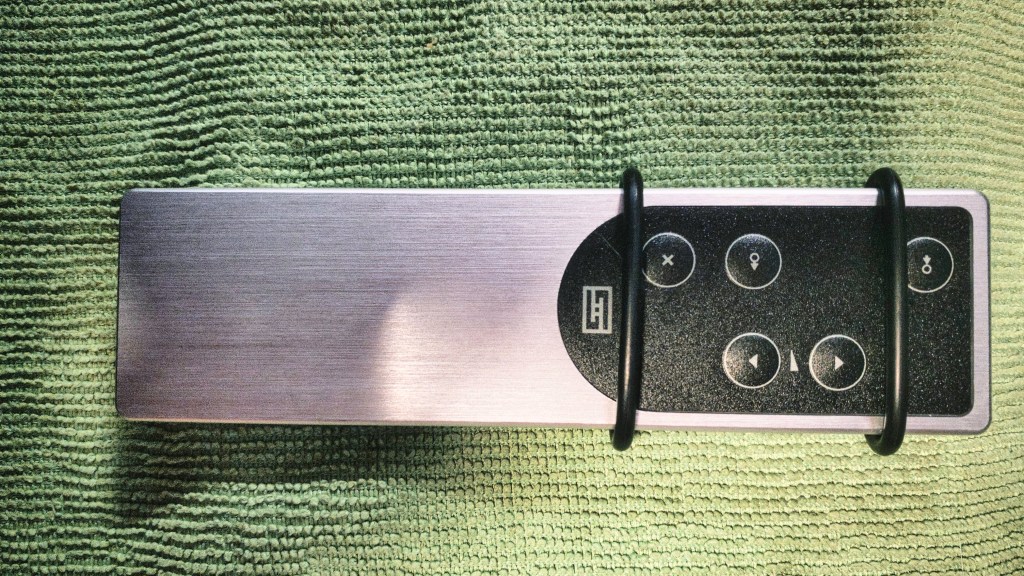
Once a proof of principle was obtained, the Moocher discovered that an advanced modification was possible, one that let the remote sit flat and isolated it from the surface upon which it rested. There is some suspicion on the Moocher’s part that 3 O-rings might be the optimum design as only one O-ring is securing the remotes internals. Redundancy is good, innit? Skip Munro Lean Design? We’re slowly leaving that universe.
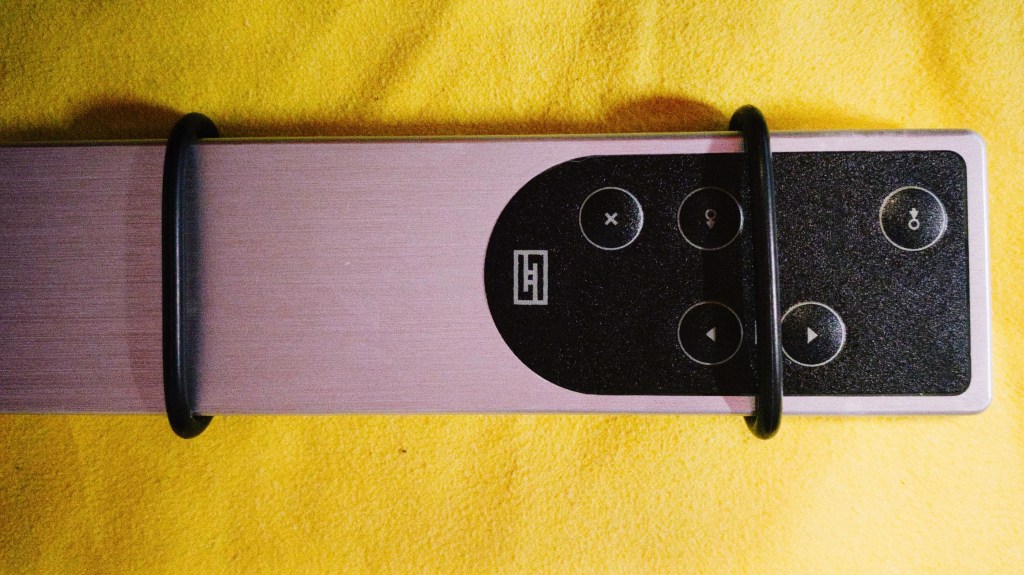
Clearly, if 2 O-rings can be applied, there is still room, room for many more. After all the remote is only $20 so applying 20 one-buck O-rings might be a reasonable investment in audiophile bliss. We’ll not go there as the junk drawer is already over-full.

 Dismal Manor Dispatches
You must be logged in to post a comment.